new to the gluten free journey?


If you have been diagnosed with an autoimmune disease, one of the first questions you probably asked was this:
“Is there a cure for autoimmune disease?”
The conventional answer is usually no. Most autoimmune diseases are described as chronic conditions. In mainstream medicine, the primary goal is often to manage symptoms, slow damage, suppress inflammation, and prevent flares.
But that answer is incomplete.
No, there is not a guaranteed “cure” for every autoimmune disease. But yes, many people can dramatically improve their health when the triggers driving immune dysfunction are identified and removed. In some cases, people can enter remission, reduce flares, lower inflammatory markers, improve antibody patterns, restore nutrient status, and rebuild a stronger, more resilient immune system.
That is the context that many doctor-patient conversations are missing.
Autoimmune disease does not happen because your immune system woke up one morning and decided to attack you for no reason. Your immune system is designed to protect you. The real question should be:
What triggered the immune system in the first place?
For some people, the trigger is gluten. For others, it is chronic gut damage, nutrient deficiency, food reactions, mold exposure, infections, chemical toxicity, poor sleep, or years of inflammatory stress. In many cases, it is not one thing. It is a stack of triggers that overwhelms the body’s ability to regulate the immune response.
So when people ask, “Can autoimmune disease be reversed naturally?” the better question is:
Can the triggers be found, removed, and corrected so the immune system can calm down?
This is where diet, lifestyle, testing, and a root-cause approach become so important.
And when people ask, “How do you prevent autoimmune disease or autoimmune flares?” the answer is not just “take medication and hope.” Prevention starts by reducing the burden on the immune system before the fire spreads.
That means removing inflammatory foods, identifying gluten sensitivity, repairing the gut, correcting nutrient deficiencies, improving sleep, addressing stress, reducing toxin exposure, and testing instead of guessing.
Medication may be necessary for some people, especially when tissue damage is active or severe. But medication does not replace the need to ask why the immune system became dysregulated.
This guide will walk you through the root-cause approach to autoimmune disease: what causes it, how gluten and gut damage can contribute, what nutrients are commonly involved, what tests to consider, how to reduce flares, and how to build a plan for autoimmune recovery.

Autoimmune disease may not have a guaranteed cure, but autoimmune activity can often be influenced by diet, lifestyle, nutrient status, gut health, infections, toxin burden, sleep, stress, and environmental triggers.
The body is not static. The immune system is constantly responding to its environment. If the environment is inflammatory, the immune system becomes more aggressive. If the environment is calmer, better nourished, and less toxic, immune regulation can improve.
A root-cause autoimmune plan should ask and address the following:
If these questions have never been asked and answered, your autoimmune plan is incomplete.
According to the American Academy of Allergy Asthma & Immunology (AAAAI),
“An autoimmune disease is an illness that causes the immune system to produce antibodies that attack normal body tissues. Autoimmune is when your body attacks itself. It sees a part of your body or a process as a disease and tries to combat it.”
The above definition paints a picture that the immune system is actually attacking the body tissues. Though simplified in thought, that definition is somewhat misleading, and completely ignores the fact that autoimmune disease is primarily driven by environmental triggers.
In my experience, almost all patients seeking care at my clinic report that their doctors were quick to blame genetics as the main reason they developed AID.
Research shows that Contrary to what many patients are told, studies suggest that only about 30 percent of autoimmune disease risk is genetic, while the majority is influenced by environmental triggers like diet, toxins, gut dysbiosis, nutritional deficiencies, and microbes. The following diagram illustrates the multifactorial environmental influence on the development of autoimmune disease:
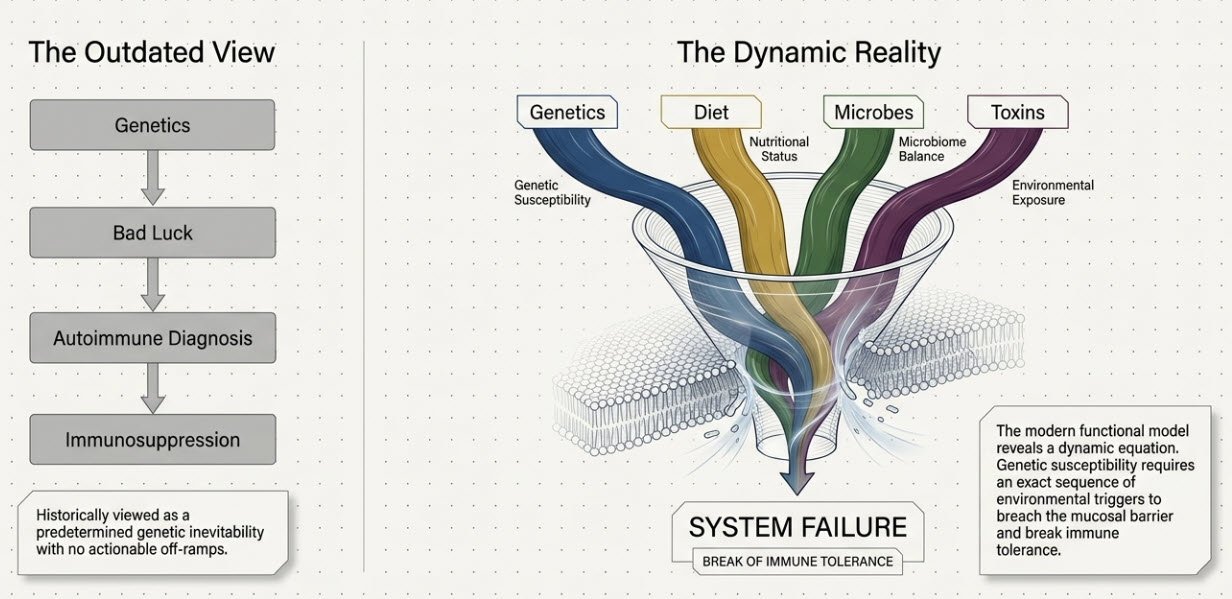
With The Above in Mind, A more comprehensive answer to the question “What is Autoimmune Disease?” would be:
Autoimmune disease occurs when the immune system reacts to unresolved triggers and produces inflammation that damages the body’s own tissues. These triggers can confuse or overstimulate the immune system and drive damage through multiple mechanisms. The most well studied mechanisms include:
Key Take Away – There are 5 primary environmental triggers for autoimmune disease:
Triggers can be investigated. Lab testing can help to identify them. Working with a doctor knowledgeable in this area may be an invaluable next step to helping your body heal.

Autoimmune damage can impact every tissue in the body. It is sometimes a challenge to diagnose accurately. Autoimmune disease often starts long before the diagnosis is given. The delays in diagnosis can contribute to prolonged debilitating damage to joints, nerves, skin, thyroid tissue, pancreatic cells, the gut, the brain, connective tissue, blood vessels, or other organs. This damage leads to loss of quality of life, increased risk of death, increased costs, increased patient frustrations.
Below is short list of autoimmune conditions. For a comprehensive list of all known AID’s visit Autoimmune.org
Autoimmune disease is one of the most overlooked health crises in modern medicine.
An estimated 50 million Americans suffer with autoimmune disease. Compare that to roughly 9 million living with cancer and 22 million living with heart disease, and the scale of the problem becomes obvious. Autoimmune disease is not rare. It is common, growing, and deeply misunderstood.
One of the biggest blind spots in autoimmune disease is the overemphasis on genetics. Yes, genetics are important. Some people are born with a greater susceptibility to autoimmune disease. But genetic susceptibility is only a small part of the story.
Human genetics have not dramatically changed in the last 20 years. Yet several autoimmune diseases have increased substantially over that same time period. This alludes to the fact that something in the environment is likely pulling the trigger.
A large UK population study followed more than 22 million people from 2000 to 2019 and measured incidence trends for 19 autoimmune diseases. The researchers found that several autoimmune conditions increased sharply, including celiac disease, Graves’ disease, Sjögren’s syndrome, ankylosing spondylitis, rheumatoid arthritis, Addison’s disease, and myasthenia gravis.
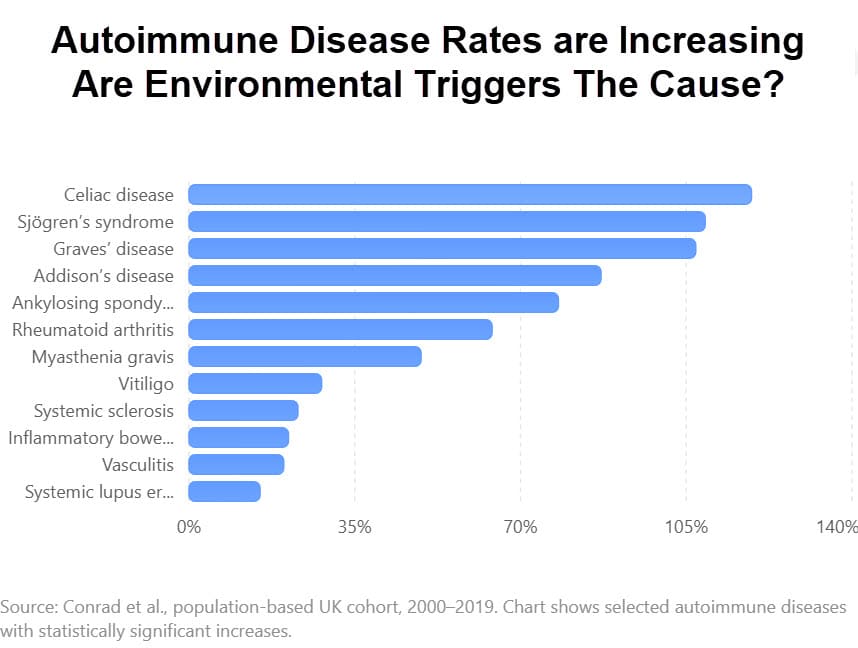
A separate U.S. study analysis found that antinuclear antibodies, a common marker of autoimmunity, rose from 11.0% in 1988–1991 to 15.9% in 2011–2012, corresponding to an estimated increase from 22 million to 41 million affected individuals. The authors noted that ANA prevalence increased substantially and was not explained by obesity, smoking, or drinking trends.
Genes can create susceptibility, but they cannot explain the rapid rise in autoimmune disease by themselves. As stated above, human genes have not changed dramatically over this last generation. On the other hand, environmental triggers have increased exponentially. Examples of these triggers include: food processing/preservation techniques, toxic chemical exposures, polypharmacy (increased medicine use), and chronic stress.
There are more than 100 recognized autoimmune diseases, and symptoms can affect every organ system in the body. The thyroid, joints, brain, nerves, skin, gut, pancreas, liver, blood vessels, and connective tissue can all be involved. That means one patient may see an endocrinologist, another a rheumatologist, another a gastroenterologist, another a neurologist, and another a dermatologist, even though all of them may be dealing with the same underlying problem: immune dysregulation.
The traditional medical system is organized by body part, not by root cause.
To complicate matters further, there is a lot of symptom overlap between different types of AID.
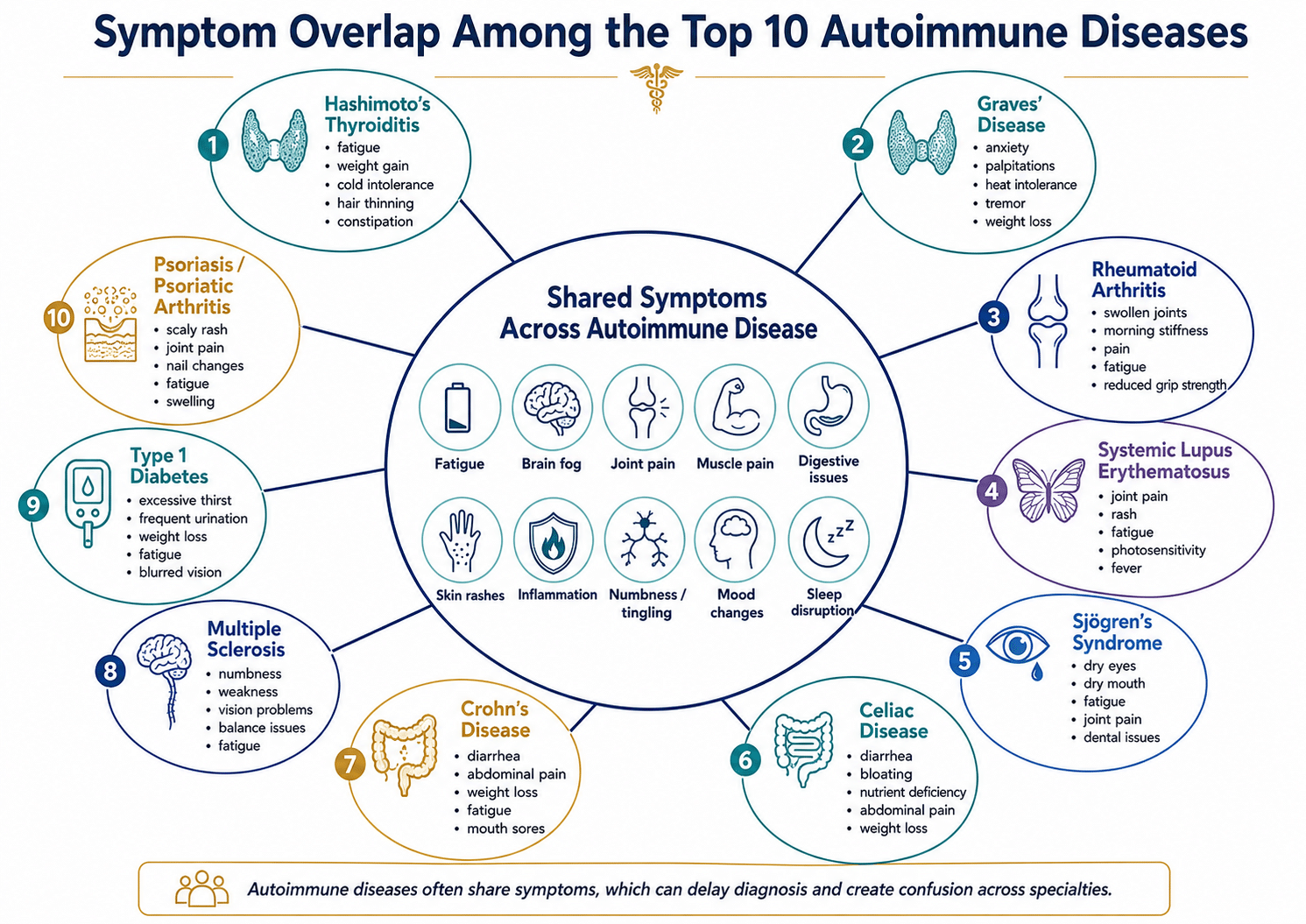
Most doctors are not trained to investigate autoimmune disease this way. Medical education provides limited time on autoimmune disease as a whole, and specialists are often trained within narrow lanes. As a result, many do not recognize the relationships among different autoimmune conditions, the shared triggers that can drive them, or the fact that one autoimmune diagnosis increases the likelihood of others.
Many patients with autoimmune disease initially present to their doctors with chronic and sometimes non-specific symptoms. From the onset of symptoms, a formal diagnosis can take almost 5 different doctors and 4.6 years.
Autoimmune disease often begins quietly. Early symptoms may be vague, intermittent, and easy to dismiss: fatigue, joint stiffness, brain fog, digestive problems, rashes, numbness, hair loss, anxiety, muscle pain, or strange inflammatory flares that come and go. These symptoms may not fit neatly into a diagnosis at first, so patients are often told their labs are normal, their symptoms are stress-related, or they should wait until things get worse. And too often, that is exactly what happens. The disease becomes more obvious only after more tissue damage has occurred.
Research on AID’s is another limitation. Much of it is disease-specific. Lupus is studied as lupus. Hashimoto’s is studied as thyroid disease. Crohn’s is studied as bowel disease. Multiple sclerosis is studied as neurological disease. But autoimmune diseases share common mechanisms, common triggers, and common inflammatory patterns. More crossover, collaboration, and information-sharing are desperately needed.
Until medicine stops treating autoimmune disease as a collection of disconnected labels, patients will continue falling through the cracks.
Medical gaslighting has become a serious problem eroding patient trust in the medical system. Autoimmune patients are often frustrated because the medical system focuses on naming the disease and managing symptoms, but not always on listening to the patient or investigating why the immune system is inflamed. Almost half of autoimmune patients are told by their doctors that they are chronic complainers or that they are too worried about their health.
In one study, negative medical encounters led to insecurity, distrust, loss of self-confidence, and changes in health-seeking behavior. Some patients began under-reporting symptoms or avoiding care because they expected to be dismissed.
It may be that the limitations in medical training combined with a medical system focused on system management has led to overwhelmed doctors who are too often willing to dismiss patient concerns.
When most patients are diagnosed with autoimmune disease, the treatment conversation usually starts with one goal: suppress the immune response.
That may be necessary in some cases. If inflammation is actively damaging tissue, medication can be useful, and sometimes life-saving. But there is a major limitation patients need to understand:
Autoimmune medications do not identify or remove the trigger that caused the immune system to become inflamed in the first place.
They are designed to reduce inflammation, block immune signals, slow tissue destruction, or control symptoms. In my opinion, this is the fundamental problem with mainstream approaches to treatment. A patient may be given a variety of immune mediating medications – i.e. biologics, DMARD’s, steroids, NSAID’s, etc. But keep in mind the most important fact. The immune system is not the enemy. It is responding to environmental triggers. Those triggers need to be identified.
A root-cause approach to autoimmune disease should investigate the major trigger categories that can confuse, activate, or exhaust the immune system. Simply put, there are 5 major trigger categories for AID: Food, chemicals (environmental toxins), microbes, nutritional deficiencies, traumatic or chronic stress. Let’s explore these in more detail.
Gluten is one of the most well researched triggers in autoimmune disease. Celiac disease is the clearest example. It is an autoimmune disease triggered by gluten in genetically susceptible individuals. When someone with celiac disease eats gluten, the immune system attacks the lining of the small intestine.
But gluten-related problems are not limited to celiac disease. Non-celiac gluten sensitivity can also involve immune activation and symptoms outside the gut, including neurological, skin, joint, and inflammatory symptoms.
In a recent systematic review summarizing 83 publications, it was found that 911 out of 1,408 AID-affected patients showed improvement on a GFD. Abstaining from gluten intake was found to be efficient in 80% of the publications and clinically beneficial to 65% of the patients.
For people with autoimmune disease, gluten should be taken seriously. If you have Hashimoto’s, rheumatoid arthritis, psoriasis, lupus, neurological symptoms, chronic inflammation, or multiple autoimmune diagnoses, gluten sensitivity testing should be considered.
**An important distinction: A standard celiac panel is not the same as a full gluten sensitivity evaluation.
Many people are told, “You don’t have celiac disease,” but they were never properly evaluated for broader immune reactions to gluten or grain proteins. In my experience, Non Celiac Gluten Sensitivity is far more common, and HLA-DQ genetic testing is one of the best ways to measure for this risk.
In my clinic, many patients have come to me from all over the world having been told that they don’t have celiac disease. Upon further testing (to include HLA-DQ), many of these patients are identified as carriers of genetic risk markers for gluten reactivity. And the outcomes of going gluten free for them are life changing. I discuss these outcomes in my book, No Grain No Pain, but you can also see many of my patient outcomes here.
Bottom line: If you have autoimmune disease, test for gluten sensitivity. Do not guess.
The gut lining is one of the most important barriers in the body. It decides what gets absorbed and what stays out. When the gut barrier becomes damaged, larger food particles, toxins, bacterial fragments, and inflammatory compounds can cross into the bloodstream. This can stimulate immune activity and contribute to chronic inflammation. This process is often called leaky gut, or intestinal permeability.
Gut barrier damage may be promoted by:
If you gut is permeable, your immune system will continue to be bombarded, and autoimmune inflammation will persist.
Essential nutrients are the molecular work horses of your body. Without them, inflammation increases, healing slows, and immune dysregulation persists. Deficiencies can affect immune tolerance, inflammation, antioxidant defense, tissue repair, detoxification, mitochondrial function, hormone balance, and gut integrity.
Researchers and clinicians have identified a wide variety of nutritional deficiencies that can contribute to, exacerbate, or delay autoimmune healing. Nutrients commonly involved in autoimmune patterns include:
This is why being advised to “eat healthy” is often not enough. A person can eat a clean diet and still be deficient. Gut damage, medications, surgery, poor absorption, chronic inflammation, and genetic needs can all affect nutritional status and nutrient demand.
That is why I always come back to this principle: Test, don’t guess. An Intracellular Nutrient Analysis can help identify functional nutrient deficiencies that standard blood work may miss. For autoimmune patients, this type of testing can be one of the most important steps in building a personalized plan.
Gluten is a major trigger, but it is not the only food that can drive inflammation. Food sensitivities are a common consequence of leaky gut. In my clinical experience, many patients develop more and more reactions to foods because they have intestinal permeability. This sets up a viscous cycle. Leaky gut causes food reactions, food reactions drive autoimmunity flares. The best way out of the cycle is to address the breach in the gut barrier, test for food reactions, and eliminate offending foods from the diet. This process reduces immune stress and if followed long enough, can lead to dramatic improvement in a patients symptoms.
After seeing and testing more than 10,000 patients, some of the most common food triggers of autoimmunity include:
Some of these foods may be healthy for one person and inflammatory for another. Elimination diets can be useful, but food sensitivity testing is invaluable in helping to identify food immune triggers that are not obvious from symptoms alone.
Microbial imbalance and Infections can be major autoimmune triggers. Some infections may activate the immune system through molecular mimicry, where a microbe resembles human tissue closely enough that the immune system begins attacking both. Some microbes produce toxins that can disrupt the gut barrier and drive chronic inflammation.
Common microbial triggers include:
If the immune system is constantly fighting a microbial overgrowths, it may have a harder time returning to a regulated state. There are a variety of laboratory tests that your doctor can run to help identify microbial triggers.
Your immune system is also affected by your environment. If your autoimmune disease began after a suspected toxic environmental exposure, it would be wise to discuss with your doctor and insist on appropriate testing to rule out toxic exposure as a contributing factor. Some of the most common environmental drivers of autoimmunity include:
A few things you should consider, and questions you should ask yourself include:
Your doctor should have asked these and many other questions. If he/she didn’t, consider finding a doctor who probes deeper. It is well established that 80% of the diagnosis is based on detailed history taking. If they aren’t asking the questions, you aren’t getting appropriate care, and it is likely you are getting the wrong treatment. The #1 rule when treating environmental exposure based disease is to change the environment.
Sleep deprivation has been linked to increased risk for the development of autoimmune disease. Sleep is when your immune system repairs, regulates, and recalibrates. Poor sleep can increase inflammation, weaken tissue repair, impair detoxification, and worsen pain perception. It can also increase cravings, raise blood sugar, and amplify stress hormones.
As sleep is an essential need in autoimmune recovery. If you are not sleeping well, you should be addressing the following components:
According to some research, 80% of those diagnosed with autoimmune disease report a major stress event before their diagnosis. Chronic stress affects cortisol, blood sugar, gut permeability, sleep quality, hormone balance, digestion, and inflammatory signaling. In my experience, autoimmune patients often have years of stress stacked on top of nutrient depletion, poor sleep, food reactions, and unresolved symptoms.
Stress can be a trigger, but the stress of being sick and not knowing why can push your nervous system into a hyper-sympathetic state.
Autoimmune illness does more than attack tissue. It can slowly reshape a person’s entire psychology. When your body becomes unpredictable, pain, fatigue, brain fog, food reactions, flares, and fear begin to train the mind to stay on high alert. Over time, many patients stop living in the present because the present feels unsafe. Joy gets replaced by research. Peace gets replaced by symptom tracking. Dinner with family becomes a question about hidden triggers. A normal day becomes another investigation into labs, supplements, diets, doctors, medications, and protocols. The search for answers is understandable, but it can become all-consuming.
I say all of this because I don’t want you to get trapped in this never ending psychological battle where your sympathetic nervous system struggles to calm down. It is real, and you have to learn to find your way out as your body heals.
There are many tools to help people with AID cope with stress. Some of the most helpful include:
In addition, there are several nutrients that you might find useful for calming your nervous system and rewiring your stress response. Some of the ones I have seen be the most useful with patients include:
I have a full breakdown on stress, best supportive nutrients, dosing, and more here.
Diet is one of the most powerful tools available because food communicates directly with the immune system. Food can provide nutrients, antioxidants, amino acids, essential fatty acids, and fiber. Food can also deliver gluten, chemicals, additives, sugar, inflammatory oils, and immune-triggering proteins.
A root-cause autoimmune diet should focus on:
For many patients, a grain-free approach is more effective than a standard gluten-free diet because gluten-free packaged foods are often full of corn, rice, sugar, gums, and processed starches. My book, No Grain No Pain, was written based on what diet works best based on seeing thousands of patient’s AID’s go into remission. The core message behind No Grain No Pain:
| Food or Ingredient | Why It Can Be a Problem |
|---|---|
| Gluten-containing grains | Can trigger celiac disease and gluten sensitivity |
| Corn | Contains a gluten called zein that may trigger AI reactions |
| Rice and gluten-free processed grains | May displace nutrient-dense foods and spike blood sugar |
| Dairy | Can mimic gluten & trigger immune reactions |
| Soy & other legumes | Contain autoimmune inducing compounds (lectins, oxalate, etc) |
| Refined sugar | Promotes inflammation and blood sugar instability |
| Industrial seed oils | Can contribute to oxidative stress and inflammation |
| Alcohol | Can increase gut permeability and liver burden |
| Food dyes and additives | May aggravate immune and neurological symptoms |
| Ultra-processed foods | Low nutrient density and high inflammatory burden |
Focus on foods that nourish the immune system instead of provoking it.
| Food Category | Examples |
|---|---|
| Clean animal protein | Grass-fed beef, lamb, poultry, wild fish, eggs if tolerated |
| Healthy fats | Avocado, olive oil, coconut, tallow, fatty fish |
| Colorful vegetables | Broccoli, asparagus, leafy greens, carrots, squash |
| Herbs and spices | Turmeric, ginger, rosemary, oregano, garlic |
| Low-glycemic fruit | Berries, citrus, green apples |
| Fermented foods if tolerated | Sauerkraut, kimchi, coconut yogurt |
| Bone broth | Supports amino acid intake and gut repair |
| Mineral-rich foods | Seafood, pumpkin seeds, organ meats if tolerated |
Conventional testing can be very helpful in autoimmune disease, especially when it comes to diagnosis, measuring inflammation, identifying organ involvement, and monitoring disease activity over time. Tests like ANA, rheumatoid factor, thyroid antibodies, inflammatory markers, blood counts, liver enzymes, kidney markers, and disease-specific antibodies can provide important information about what the immune system is doing. But conventional testing often stops short of answering the bigger question: why is the immune system being triggered in the first place?
That is where functional testing can be invaluable. Functional testing helps look for the hidden drivers that may be feeding the autoimmune process, including gluten sensitivity, food reactions, nutrient deficiencies, gut dysfunction, toxin exposure, infections, and other inflammatory burdens. In other words, conventional labs can help name and monitor the disease, but functional testing can help identify the triggers that may be keeping the disease active.
Many patients with autoimmune disease make meaningful progress when they follow my No Grain No Pain diet. Their pain reduces, energy comes back, digestion improves, inflammation starts to calm, and for the first time in years they feel like their body is responding. It’s at this point that many hit a plateau, and some even start to go backward. If this sounds like you, it’s time to think about testing. This is the point where lack of knowledge may be the impediment to your continued improvement and recovery.
Testing for gluten sensitivity, hidden food reactions, and nutritional deficiencies can reveal the barriers that are still keeping the immune system activated. A plateau in healing signals there are deeper triggers that have not been identified yet. The right testing can help you uncover those missing pieces and get you moving again toward true remission.
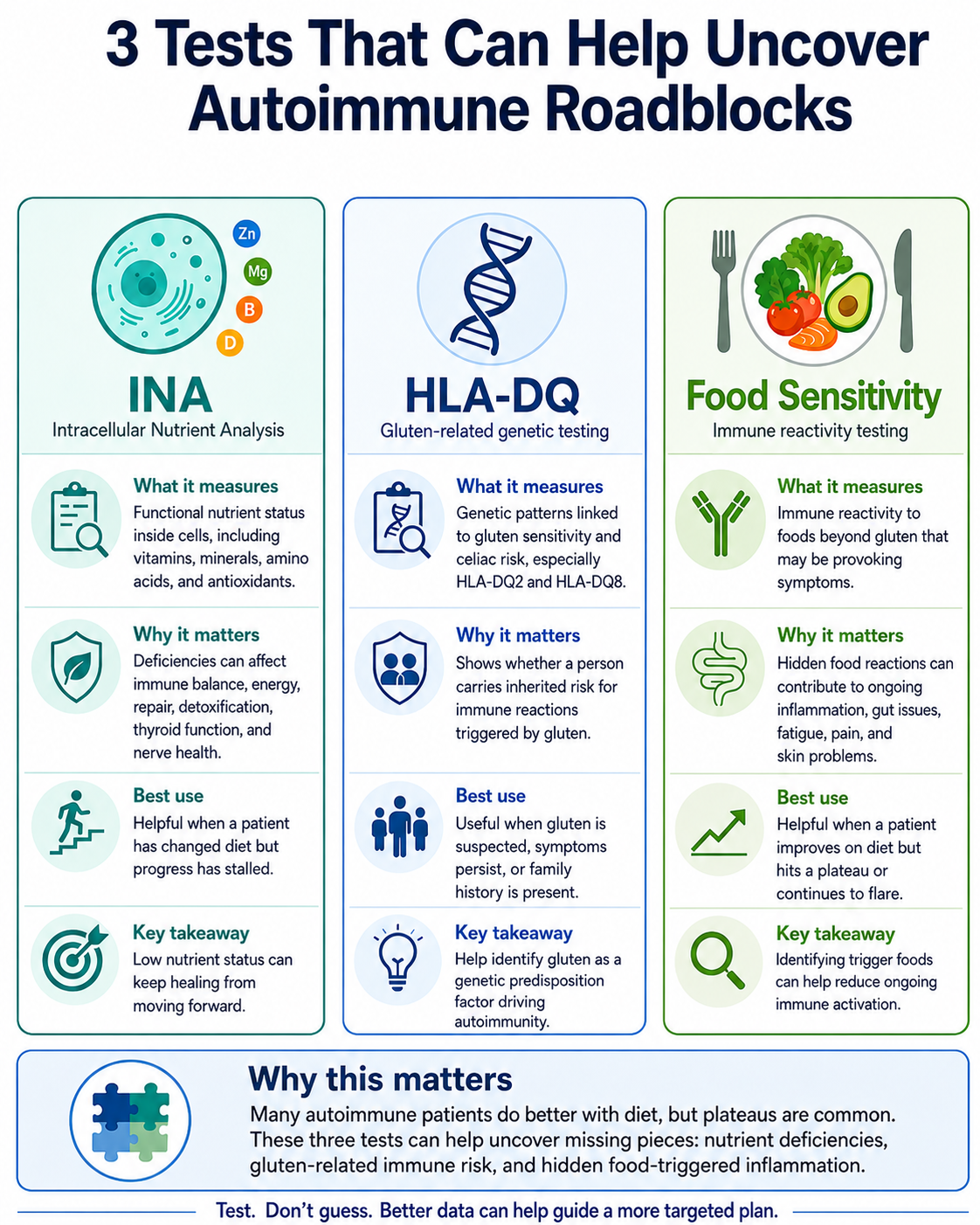
When testing is available, it is always the better path because it allows us to identify triggers with precision instead of guessing. But when testing is not currently an option, there are six nutrient deficiencies I commonly see in patients struggling with autoimmune disease: vitamin D, vitamin B12, zinc, omega-3 fats, magnesium, and vitamin C. These nutrients play major roles in immune regulation, inflammation control, tissue repair, antioxidant defense, nerve health, energy production, and the body’s ability to heal. A deficiency in any one of them can keep the immune system irritated and make recovery feel like it has stalled. This is why nutrition matters so much in autoimmune recovery. The body cannot rebuild, regulate, or calm inflammation without the essential nutrients required to do the job.
Vitamin D plays an essential role in immune regulation. In patients with autoimmune disease, low vitamin D can make it harder for the immune system to calm down and maintain immune tolerance. Healthy vitamin D levels support immune balance, inflammation regulation, bone health, muscle function, and overall resilience during recovery.
Vitamin B12 is one of the most important nutrients to evaluate in autoimmune patients because it is required for DNA synthesis, red blood cell formation, fatty acid metabolism, methylation, and the production and maintenance of myelin, the protective insulation around nerves. When B12 is low, patients can develop fatigue, weakness, anemia, brain fog, memory changes, numbness, tingling, burning pain, balance problems, and neuropathy-like symptoms. Important for those with autoimmune disease because B12 deficiency can be caused by impaired absorption, gut inflammation, celiac disease, medications, or pernicious anemia, an autoimmune condition that attacks intrinsic factor or the stomach cells needed to absorb B12.
Zinc is one of the most important minerals for immune strength and tissue repair. It supports immune cell signaling, gut barrier integrity, wound healing, antioxidant defense, and normal taste and smell. In autoimmune disease, zinc deficiency can contribute to poor healing, frequent infections, skin problems, hair loss, altered taste, and ongoing immune dysfunction. [3]
Omega-3 fats help the body regulate inflammation. EPA and DHA are used to build healthy cell membranes and produce compounds that help resolve inflammation, including resolvins, protectins, and maresins. For autoimmune patients, omega-3 fats can be especially important because chronic inflammation is often part of the disease process, and the body needs the right fats to help bring that inflammatory response back into balance.
Magnesium is required for hundreds of chemical reactions in the body, including energy production, nerve signaling, muscle relaxation, blood sugar regulation, DNA and RNA synthesis, and antioxidant production. Many autoimmune patients live in a state of chronic stress and inflammation, both of which can increase the body’s demand for magnesium. Low magnesium can contribute to muscle cramps, headaches, anxiety, poor sleep, fatigue, and slower recovery.
Vitamin C is essential for collagen production, immune defense, antioxidant protection, adrenal support, iron absorption, and tissue repair. In autoimmune patients, vitamin C helps protect cells from oxidative stress and supports the rebuilding of connective tissue, skin, blood vessels, and the gut lining. When vitamin C is low, the body may struggle to repair damage and maintain healthy immune function. Research studies have linked low levels of vitamin C to increased risk and poorer outcomes in several types of AID including multiple sclerosis, RA, Crohn’s, Type I Diabetes, and more. A number of published case studies have shown that vitamin C deficiency can mimic autoimmune diseases including lupus.
Preventing autoimmune flares starts with understanding one simple principle: the immune system has a burden limit. When that burden gets too high, the body reacts. That reaction can show up as joint pain, fatigue, brain fog, skin rashes, gut symptoms, headaches, muscle aches, swelling, anxiety, sleep disruption, or a return of old symptoms you thought were gone.
A flare usually does not happen from one isolated event. It often happens when multiple triggers stack together until the immune system can no longer compensate. Poor sleep, high stress, gluten exposure, too much sugar, infection, alcohol, chemical exposure, mold, missed meals, blood sugar swings, and nutrient depletion can all add weight to the immune system. One of these triggers alone may not be enough to set off a major flare. But combine several of them in the same week, and the body may cross its threshold.
This is why many autoimmune patients feel confused. They say, “I only had one bite,” or “I only missed sleep for a few nights,” or “I only had a little wine,” but the flare was not just about one bite, one bad night, or one exposure. It was the total load. The immune system was already under pressure, and that final trigger pushed it over the edge.
Natural flare prevention is not about perfection. It is about reducing immune burden consistently enough that the body has room to heal, repair, and regulate. The goal is to remove the major immune triggers, stabilize the body’s chemistry, restore nutrient reserves, protect the gut, support detoxification, and build enough resilience that the immune system is no longer living in a constant state of alarm.
Yes, many forms of autoimmune disease can go into remission. Remission requires removing triggers, which means you need to take the time and effort in identifying what your triggers are. There are 5 primary environmental triggers for autoimmune disease:
If you want to avoid the confusion, get tested. Testing removes the guess work, and helps put you on the path to recovery much quicker.
Basic labs often miss nutrient deficiencies, gluten sensitivity, gut damage, early autoimmunity, mold exposure, and food reactions.
Gluten-free cookies, bread, crackers, cereal, and pasta are still processed foods. Many are made with corn, rice, sugar, starch, and gums.
Supplements can help, but guessing wastes time and money. Test first when possible.
Most of the immune system is closely connected to the gut. Gut repair is not optional in autoimmune recovery.
Symptom relief is good. Root-cause correction is better.
Despite what you may have been told, autoimmune disease can go into remission. You have to identify your triggers, and address them. The process is not passive. You have to take an active role and educate yourself. You have to pay attention to your behaviors and how they may be affecting you.
Autoimmune disease is complex, but it is not hopeless. You have the power to make meaningful changes that enhance your body’s ability to heal and repair. Never let anyone tell you different. If you need inspiration, consider watching these success stories of real patients overcoming their autoimmunity.
I believe in you.