new to the gluten free journey?


Gluten withdrawal symptoms are temporary symptoms some people report after stopping gluten, such as headache, nausea, mood changes, cravings, fatigue, digestive changes, and brain fog. Symptoms often start within 24 hours, improve within days to 3 weeks, and may last longer when nutrient deficiencies, microbiome shifts, or hidden gluten exposure are involved.
Many people experience “Gluten Withdrawal Syndrome” (GWS) when they stop eating gluten, due to addictive, opiate-like compounds called gluteomorphins formed during gluten digestion. Symptoms can include headaches, stomach pain, muscle pain, irritability, depression, and more, lasting from days to weeks. GWS can mask gluten’s toxicity, leading to “silent celiac disease.” Yeast overgrowth can also mimic GWS symptoms. To minimize withdrawal, inform loved ones, prepare mentally, take nutritional supplements (Vitamin C, B3, multivitamins, probiotics), and consider working with a functional medicine practitioner.
When gluten is removed from the diet, many people feel better quickly. However, some people experience a temporary “speed bump”, and feel worse. This is commonly referred to as gluten withdrawal.
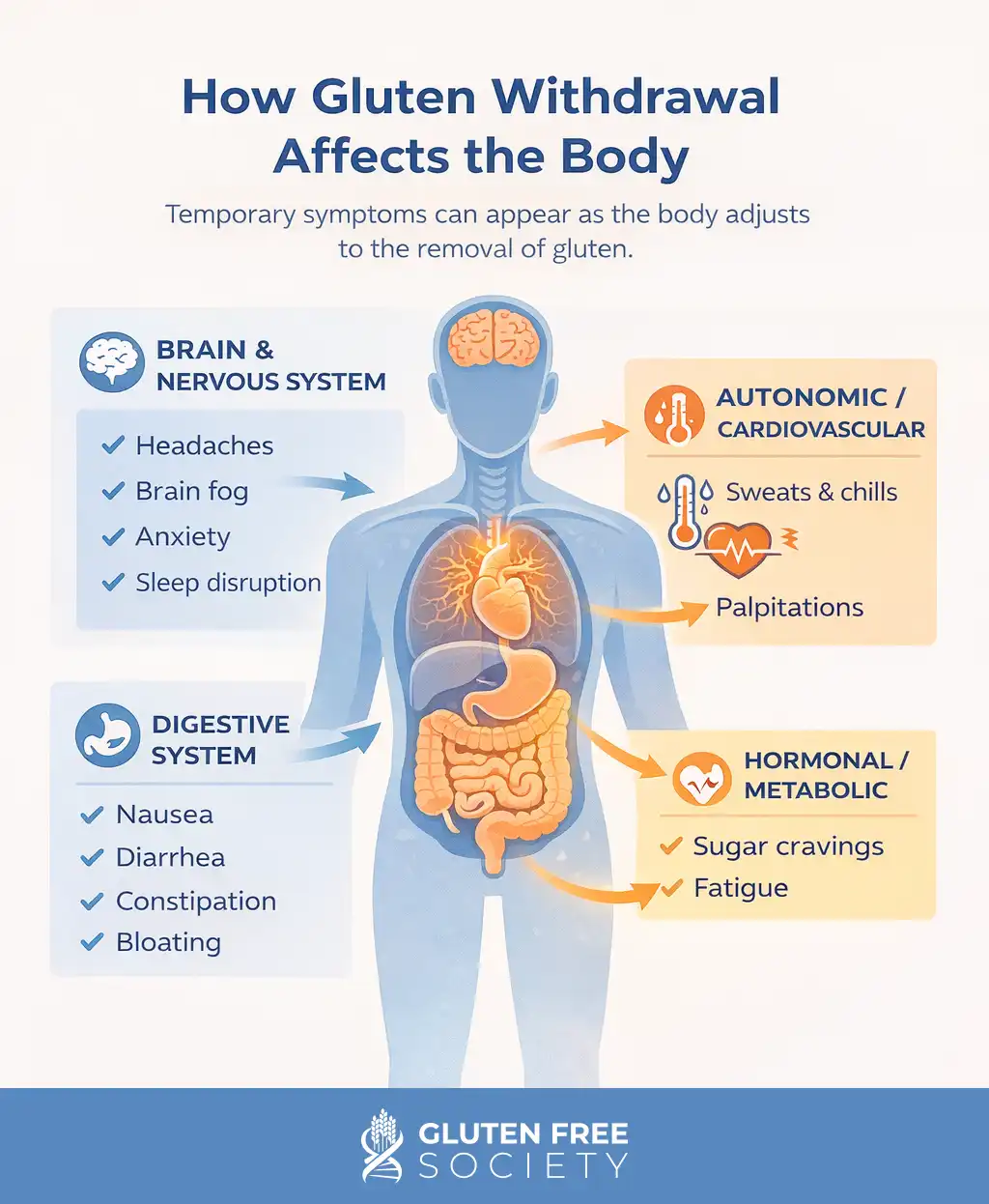
Symptoms vary from person to person, but the most frequently reported include:
Not everyone experiences all symptoms. Some notice only one or two (for example: headaches plus intense cravings), while others feel a broader mix of mood, digestive, and nervous system symptoms.
If gluten withdrawal symptoms occur, they typically appear early (within 24 hours). They most commonly improve within days to a couple of weeks as the body adapts. In some cases symptoms can linger longer, particularly when other factors overlap, such as nutrient deficiencies, blood sugar instability, microbiome disruption, or ongoing hidden gluten exposure.
| Driver | Plain-English | Key Terms | Typical Onset After Gluten Removal | Typical Duration | Common Symptoms | What May Help |
|---|---|---|---|---|---|---|
| Morphine Mimicry | Gluten digestion can produce opioid-like fragments that may act “morphine-like” in some people; stopping gluten may feel like withdrawal. | gluten exorphins, gluteomorphins, opioid-like peptides | Within 24 hours | Up to ~3 weeks | Headache, nausea, sweats, hot flashes, chills, irritability, severe sugar cravings, anxiety, diarrhea, muscle aches, pains, increased heart rate | Hydration, electrolytes, steady protein/minerals, sleep support, minimize caffeine & sugar swings, track symptoms |
| Sudden carb reduction | Going gluten-free often lowers carbs quickly; temporary lower insulin, glucose availability can cause short-term transition effects. | carb reduction, diet transition | Within 24 hours | Up to ~4 days | Constipation, bloating, diarrhea, headaches, bad breath, muscle aches, cramping, rashes, weakness | Gradual transition, consistent meals, replace carbs strategically (whole-food), fluids/electrolytes |
| Microbiome changes | Less resistant starch from grains may reduce Bifidobacteria and SCFAs (e.g., butyrate), worsening GI symptoms in some people. | Bifidobacteria, resistant starch, SCFAs, butyrate | Days to weeks | Longer-lasting if not addressed | Gas, bloating, diarrhea, poor digestion, GI pain, fatigue, brain fog | Bifidobacteria-rich probiotics, consider butyrate support, increase tolerated prebiotic fibers/resistant starch from non-gluten sources |
One of the biggest mistakes I see is this:
A person starts a gluten free diet… feels rough for a few days… and concludes, “Gluten free doesn’t work for me.”
But that conclusion is often premature.
These symptoms are most commonly short lived. They may be uncomfortable, but they are not usually a sign that the gluten-free diet is harmful, and they should not be a deterrent from staying consistent long enough to see meaningful improvement. The body is recalibrating after a major dietary shift. For many, the hardest stretch is early, and then symptoms progressively quiet down.
If symptoms are severe, persistent, or confusing, working with an experienced functional medicine practitioner can be helpful. A knowledgeable clinician can evaluate common overlapping drivers such as:
With proper guidance, many people can reduce symptom intensity, shorten the transition period, and stay consistent with the gluten-free diet long enough to experience its full benefits.
If you begin to experience any of the following severe symptoms, seek medical attention:
If you don’t know whether the gluten-free diet is the right move for you, consider genetic testing, or taking this short gluten intolerance quiz.
Though no large scale human studies have been conducted to explore causes directly, researchers and clinicians have described multiple reasons why patients may experience gluten withdrawal symptoms:
Food derived opioids have been scientifically validated and described in detail. Gluten containing grains are a prime example. When gluten is being digested in the gut, it can be broken down into protein fragments called gluten exorphins.
Also referred to as gluteomorphins, these proteins may mimic the actions of the opiate drug, morphine. If you aren’t familiar, opiates are a class of medication commonly used to help people suffering from chronic pain syndromes.
It is possible that gluteomorphins may create opioid-like effects and cravings. And just like people who stop taking these pain medications can suffer from severe withdrawal symptoms, some people who stop eating gluten and grains may go through withdrawal-like symptoms – AKA – Gluten Withdrawal Syndrome. These symptoms typically start within 24 hours of gluten elimination, and can last for up to 3 weeks.
Symptoms frequently reported by patients in my clinic include:
Many going on a gluten free diet experience a rapid decline in total carbohydrate consumption. This diet transition can lead to lowered insulin production and a temporary reduction of glucose availability to the brain contributing to a variety of potential unwanted side effects that may last up to 4 days:
Some research shows that a gluten free diet can cause alterations in the microbiome (reduced Bifidobacteria) due to a reduced consumption of resistant starches from grains. Because these bacteria produce short chain fatty acids (SCFA) that regulate gut healing, and immune response, some patients report increased GI symptoms when going gluten free. These symptoms can be long lasting without intervention. Research suggests that using probiotics rich in Bifidobacteria and supplementing with butyrate may be beneficial for these individuals. Side effects here can be longer lasting without addressing the microbiome directly. They include:
Yeast overgrowth in the GI tract is common. Especially in countries where heavy carbohydrate diets combined with frequent alcohol consumption and widespread use of antibiotics are the norm. Yeast in the GI tract thrive on carbohydrate-based foods that break down easily into sugars.
A gluten/grain free diet is much lower in these types of carbohydrates. As a result, people who have yeast overgrowth can manifest similar negative side effects when initially going gluten free, because by reducing dietary sugars, they are starving and killing the yeast population in the gut. When large amounts of yeast cells (e.g., Candida) are killed rapidly, releasing metabolic endotoxins that trigger temporary, flu-like inflammatory symptoms.This process is known as a “yeast die-off” reaction. Common symptoms of this include:

Taking natural herbs that have natural anti-yeast properties can be very helpful in this regard. Taking a strong pro-biotic can also be of great value to help support the microbiome during your transition to a gluten/grain-free diet.
Gluten withdrawal symptoms, when they occur, are usually temporary. The goal during this transition isn’t to “power through” with willpower. The goal is to stabilize the nervous system and gut while the body adapts to the gluten free diet.
Helpful basics:
Nutritional deficiencies can create a challenge in the healing process. So supporting your body with a high potency, gluten free multi vitamin may also have a positive impact during your diet transition.
Work with your doctor or a functional medicine practitioner. Having someone on your team with experience can make all the difference in the world. A qualified expert can guide you through this process with confidence and make additional suggestions that may be very helpful for you on your healing journey.
Gluten withdrawal symptoms are temporary symptoms some people report after stopping gluten (and often grains), such as headaches, cravings, mood changes, fatigue, brain fog, sleep disruption, and digestive changes.
When they occur, symptoms most commonly begin within 24 hours of eliminating gluten.
Many cases improve within days to 2 weeks. Some people report symptoms lasting up to ~3 weeks, especially when other factors overlap.
Commonly reported symptoms include headache, nausea, sweats/chills, irritability, anxiety, sugar cravings, digestive changes, body aches, palpitations, fatigue, brain fog, and sleep disruption.
Symptoms may overlap from three drivers: withdrawal-like effects from opioid-like gluten peptides in susceptible individuals, sudden carbohydrate reduction, and microbiome shifts that affect digestion and gut comfort.
Yes. These are commonly reported during the early transition, especially when sleep, hydration, blood sugar stability, and nutrient status are not well supported.
Not usually. Symptoms are most commonly short-lived and often reflect an early adjustment phase rather than a sign the diet is harmful.
Consistent meals, protein-first eating, hydration/electrolytes, avoiding abrupt carb crashes, and targeted nutrition support can reduce symptom intensity and shorten the transition.
Yes. Deficiency symptoms can overlap heavily with withdrawal-like symptoms. Common patterns in gluten sensitive patients include low iron, zinc, vitamin D, vitamin B12, and omega-3 fatty acids.
Withdrawal-like symptoms typically emerge during the first days after elimination and ease over time, while accidental exposure often follows a specific meal or cross-contact event and may repeat with similar triggers.





15 Responses
Thank you for this valuable information. Why hasn’t someone explained this before now?!
My arthritis used to ache very badly. Cortisone shots helped temporarily but we’re not a good long-term option. I went gluten free for a month and my pain was gone. I tested the outcome by eating one slice of regular bread. The following morning my joints in my hands were red and swollen, very painful to move. I have never gone back. Gluten and I have had a complete parting of the ways. Wish I had done it years ago
I have the same experience! No more gluten for me. My son is gluten free and is now easier to get along with, he also thinks more clearly, and no more post nasal drip. My husband is gluten free, and no more “Hay fever”, much happier, more energy.0
When I went gluten free 7 years ago, my body did not want to join me on this new life adventure. I had been hospitalized so many times and the last two week stint was given the diagnosis of malnutrition and leaky gut…with no directive or explanation at a major medical research center. I asked about going gluten free, but no that’s not necessary my team said. Fed up with doctors, I went rogue. I followed the celiac food guide and I had to learn what I could about how long it takes for the body to release itself of the deprivation of the addiction foods have after 68 years of living…sick. Oh, I was well aware of every week that I won the battle and after almost a year, I was free. I never cheated because I now learned gluten was poison to my body and my body reacted joyfully. I’m 75 now, my autoimmune issues are in remission, I supported my return to health with supplements, gut support meds and good high lactobacillus strains of probiotics.
Wonderful story! Thanks for sharing Audrey!
Bravo
When I stopped all gluten and dairy I felt amazing for 4 or 5 days. My digestive symptoms completely cleared up and my depression and anxiety disappeared. I was excited about life again. Then on day 6 I became extremely frustrated, sad, irritable, and some gut issues / constipation returned (although nowhere near as bad as when I was eating gluten and dairy). It’s now 2 weeks in and I feel like I’m going through major withdrawal (I know what it feels like due to giving up smoking many years ago). I have been extremely vigilant with my diet so no chances of cross contamination. Everyone says I look so much healthier but I feel awful. Is this normal to feel better for a few days and then for the withdrawal to set in? Thanks
Yes, me too after 4/5 day’s gluten free I have extreme withdrawal.
Have to solved the problem now?
Hi,
I’m experiencing the same thing currently. I was just diagnosed with celiac along with Hashimoto disease. I have cut out gluten completely, and I’m also not supposed to have any dairy / sugar.
The first week I felt great! I had mental clarity, I had the energy to exercise. I felt happier too. All of a sudden over the last week I’ve felt awful. I’m tired all the time no matter how much I sleep. I feel depressed, irritable and almost feel like I have a low grade fever. I think it is starting to pass, but it was definitely discouraging, as I thought the diet wasn’t working. Glad I found this article /comment
I hope you’re feeling better now. This is the second time I’ve removed gluten from my diet and have had the same symptoms both times. It’s a wild ride!
Hi George, Yes absolutely. I’ve tried getting off of gluten, dairy and sugar many times separately or all together and I have the same reaction, better at first then feel worse and worse mentally/emotionally, cognitively and physically as I keep staying away from those things. I’ve just learned about the problem with all grains a few weeks ago so I stopped them and I for the first 3 days I had the most improvement I’ve had in years for my chronic back, joint and muscle pain that I’ve had for about 10 years that’s been getting worse every year and that I’ve tried many things to help. Going grain free was an amazing improvement at first now a week in I’m feeling more pain, harder to think clearly, and flu like symptoms all of which come and go through the day. But I’ve lost 3 to 4 pounds and the deep redness all over my face is clearing up. Also there are times the chronic pain is better than it has been in years in between the bouts of pain. Hope this helps and hang tough brother!
The first 3-4 days for me felt normal, but after the first week I got waves of crushing depression and anxiety was the worst I had in over 10 years. I also noticed my tolerance for coffee or alcohol plummeted and they both hit me much hard. After the 2.5 weeks of depression and anxiety I was pretty much back to normal.
Fast forward 3 months, and I feel normal except for I have random dull aches that pop up through out the day, and the locations are also random. There’s no pain, just a very dull achey feeling. I went to the Urgent Care and the guy told me my intestines could take a few months to heal. Is that true? Every time I google it the internet just tells me I am dying of cancer haha
Hi, I found your article to be very helpful. I have had years of stomach issues.
Frustrated, I went to an allergist and discovered that I had celiacs disease.
I’ve been off all foods that are not gf for a week now.
I wanted to ask how important it was to separate my foods in the pantry by gf and g
Also I have started to have vomiting.
I’m on dialysis and lost 50 lbs, but the worst part is that nutritionally I’m starved.
Please advise.
Thank you
I’m doing my best to steer clear of wheat/grains and while I’m feeling like a wet rag now I know it will be worth it long term.
I have been off gluten for years due to old illness I figured out it was causing but I just came on to say that even when I cheat a little bit after many years I’m like oh I can have some and I’ll have a little bit. I swear to God it’s the worst emotional pain I’ve ever had in my life – -horrible sadness stabbing like pain in my chest about three days after eat it. I’m going to through it right now I have an idea why I keep doing this to myself, but do not cheat guys not worth it, this is literal poison and it’s just disturbing that this is allowed to be legal in the world !
It’s obviously the cause of so many mental illnesses that people don’t understand why they have.