
Vitamin K: Benefits, Deficiency Symptoms, Food Sources, Testing, and Safe Dosage
Vitamin K is an essential fat soluble vitamin required by the body to function normally.
Many think of vitamin K as the “blood clotting vitamin.” That is true, but incomplete. Vitamin K helps your blood clot properly, but it also helps activate proteins that regulate bone strength and calcium placement in the body. In simple terms, vitamin K helps your body use calcium intelligently. Calcium belongs in your bones and teeth. Without vitamin K, calcium can deposit in soft tissues, blood vessels, or places where it can interfere with normal function.
Because of it’s fat soluble nature, vitamin K is very important to investigate for people with a history of diseases that can cause or contribute to fat malabsorption. These include:
- Gluten sensitivity
- Celiac disease
- Autoimmune inflammation
- Inflammatory bowel disease like ulcerative colitis
- Liver inflammation or gall bladder disease (including those who have had their gall bladder removed)
- Chronic digestive problems
- Pancreatitis
- Bariatric surgery patients (stomach bypass)
- Those on long-term medications that interfere with absorption or vitamin K function is a fat-soluble vitamin, which means your ability to absorb it depends on healthy digestion, bile flow, pancreatic enzymes, and the ability to absorb dietary fat.
Vitamin K at a Glance
| Category | Key Details |
|---|---|
| Nutrient name | Vitamin K |
| Nutrient type | Essential Fat-soluble vitamin |
| Main forms | Vitamin K1, phylloquinone; vitamin K2, menaquinones such as MK-4 and MK-7 |
| Main functions | Blood clotting, bone protein activation, calcium regulation, vascular protein activation |
| Deficiency symptoms | Easy bruising, prolonged bleeding, bleeding gums, nosebleeds, heavy menstrual bleeding, poor clotting, possible bone weakness |
| Common causes of low status | Poor diet, fat malabsorption, celiac disease, gut inflammation, bile insufficiency, bariatric surgery, gallbladder removal, prolonged antibiotic use |
| Medications that interfere with vitamin K | Warfarin, bile acid sequestrants (used to treat cholesterol and mold related illness), orlistat, prolonged antibiotics, some cephalosporins |
| Best tests | INA, PT/INR, serum phylloquinone, undercarboxylated osteocalcin, dp-ucMGP |
| Grain-free food sources | Kale, collards, spinach, broccoli, Brussels sprouts, parsley, liver, egg yolks, grass-fed animal foods, natto |
| Common supplement forms | Vitamin K1, vitamin K2 MK-4, vitamin K2 MK-7 |
| Works with | Vitamin D, magnesium, calcium, vitamin A, dietary fat, bile, taurine, pancreatic enzymes |
| Dr. Osborne Supplements With Vitamin K | Ultra K+D, Ultra K, Bone Box, Ultra Nutrients |
What Is Vitamin K?
Vitamin K is a family of fat-soluble nutrients required to activate a group of proteins called vitamin K-dependent proteins.
These proteins help regulate:
- Blood clotting
- Bone mineralization
- Calcium movement
- Vascular health
- Cartilage and connective tissue biology
Vitamin K acts as a cofactor for an enzyme called gamma-glutamyl carboxylase. This enzyme activates certain proteins by allowing them to bind calcium properly. The NIH identifies prothrombin, osteocalcin, and matrix Gla protein as key vitamin K-dependent proteins involved in blood clotting, bone metabolism, and vascular biology.
The easiest way to understand this is simple:
Vitamin K helps activate the proteins that regulate clotting, bone mineralization, and calcium placement.
Without enough vitamin K, those proteins may remain under activated. When that happens, blood clotting can suffer, bone proteins may not form optimally, and calcium regulation may become less efficient.
Vitamin K1 vs Vitamin K2
Vitamin K comes in two major natural categories.
| Form | Name | Main Sources | Primary Role |
|---|---|---|---|
| Vitamin K1 | Phylloquinone | Green leafy vegetables | Blood clotting support |
| Vitamin K2 | Menaquinones | Fermented foods, animal foods, gut bacteria | Bone and calcium metabolism support |
Vitamin K1 is the dominant form found in plants. It is especially high in leafy greens like kale, spinach, collards, parsley, and turnip greens.
Vitamin K2 refers to a family of menaquinones. The two most discussed supplement forms are:
- MK-4 is produced by the body from vitamin K1. Conversion of K1 into MK-4 can occur in the intestines or in specific tissues (brain, testes, vascular walls) and acts rapidly, making it crucial for immediate tissue-level needs. It has a short half life (about 6-8 hours). MK-4 is also derived from the consumption of animal based foods. It is the natural form of vitamin K2 used by the body.
- MK-7 is not produced by the body. It is found in fermented foods like Sauer kraut and natto. MK-7 can be converted into MK-4 by the body. MK-7 has a longer half life (typically 48-72 hours). This longer half life is one reason why many supplement companies favor using MK-7 over MK-4.
Key Takeaway: Vitamin K1 and K2 are related, but they are not identical. K1 is heavily associated with clotting, while K2 is often emphasized for bone and calcium metabolism support. Both are primarily supplied by the diet. Some synthesis of K2 occurs by the gut flora.
When Was Vitamin K Discovered?
Vitamin K was discovered through research on blood coagulation. Danish scientist Henrik Dam observed that animals fed certain diets developed bleeding problems. Edward Doisy later helped identify the chemical nature of vitamin K.
Dam and Doisy shared the 1943 Nobel Prize in Physiology or Medicine for their discoveries related to vitamin K.
The “K” comes from the German word Koagulation, meaning coagulation or clotting.
At first, vitamin K was understood primarily as a clotting nutrient. Today, research has expanded into bone health, osteocalcin activation, matrix Gla protein, vascular calcification, calcium metabolism, nerve protection, liver protection, and mitochondrial energy production.
What Does Vitamin K Do in the Body?
1. Vitamin K Supports Normal Blood Clotting
Vitamin K is required to activate clotting proteins, including prothrombin, also known as clotting factor II. Prothrombin is directly involved in blood clotting.
When vitamin K levels are low, the blood may take longer to clot. This can manifest with the following symptoms:
- Easy bruising
- Nosebleeds
- Bleeding gums
- Heavy menstrual bleeding
- Prolonged bleeding after cuts
- Abnormal PT/INR results
Bleeding and hemorrhage are the classic signs of vitamin K deficiency, although these generally occur in severe cases. Easy bruising and nose bleeding are common early onset symptoms.
The blood thinning drug, Warfarin, works by blocking vitamin K activity and reduces activation of vitamin K-dependent clotting proteins.
2. Vitamin K Supports Bone Health
Vitamin K helps activate osteocalcin, a protein involved in bone mineralization and bone turnover. The NIH notes that vitamin K deficiency could reduce bone mineralization because vitamin K is required for osteocalcin carboxylation.
Bone health is not just about calcium. It also requires:
- Vitamin D
- Magnesium
- Vitamin K
- Protein
- Trace minerals
- Hormone balance
- Resistance exercise
- Low inflammation
- Proper digestion and absorption
A 2006 systematic review and meta-analysis found that vitamin K supplementation, especially MK-4 in several Japanese trials, was associated with reduced fracture risk and improved bone outcomes.
A calcium-only strategy is incomplete. Bone metabolism requires a coordinated nutrient system.
3. Vitamin K Helps Regulate Calcium Placement
Calcium should be directed into bones and teeth. Vitamin K helps activate proteins involved in that process.
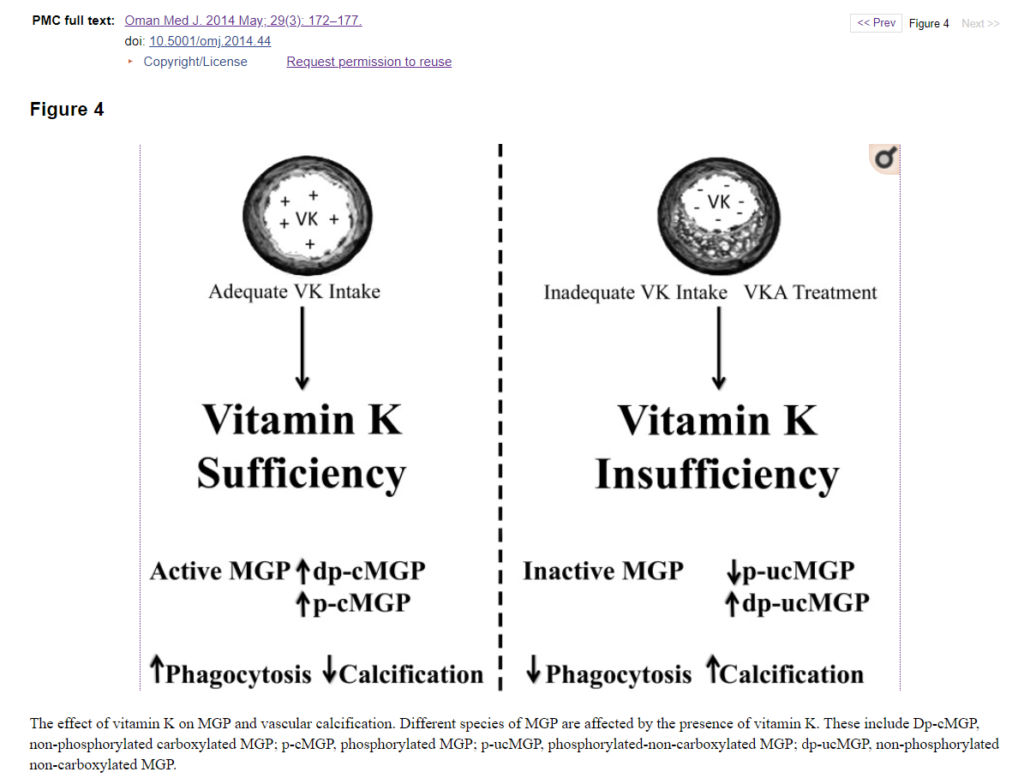
One of the most important is matrix Gla protein, often abbreviated as MGP. MGP is a vitamin K-dependent protein found in vascular smooth muscle, bone, and cartilage. It is studied because of its role in abnormal calcification biology.
Think of vitamin K as part of the body’s calcium traffic control system.
Vitamin D helps absorb calcium. Vitamin K helps activate proteins involved in directing calcium.
This is why taking vitamin D or calcium while ignoring vitamin K and magnesium is not a complete strategy.
4. Vitamin K May Support Cardiovascular Health
Vitamin K’s cardiovascular relevance centers around calcium regulation and MGP activation.
A 2023 systematic review and meta-analysis of 14 randomized controlled trials, including 1,533 participants, found that vitamin K supplementation significantly slowed progression of coronary artery calcification scores and lowered dephosphorylated-uncarboxylated MGP, a marker associated with vitamin K status.
The practical takeaway is this:
Vitamin K is not a cardiovascular drug. It is a nutrient required for proteins involved in calcium balance. A complete cardiovascular nutrition strategy should also consider vitamin D, magnesium, omega-3 fats, inflammation control, blood sugar control, and a clean grain-free diet.
5. Vitamin K Depends on Healthy Digestion
Vitamin K is fat-soluble. To absorb it well, your body needs:
- Adequate dietary fat
- Healthy bile flow
- Pancreatic enzymes
- A functioning small intestine
- A healthy gut environment
The NIH explains that vitamin K is absorbed with dietary lipids and other fat-soluble vitamins through mixed micelles using bile and pancreatic enzymes, then absorbed by small intestinal cells.
If someone has chronic diarrhea, greasy stools, celiac disease, inflammatory bowel disease, gallbladder removal, pancreatic insufficiency, or bariatric surgery, vitamin K status can suffer.
A person may be eating vitamin K-rich foods and still not absorbing them well.
Why Vitamin K Deficiency Is Commonly Missed
Severe vitamin K deficiency is not considered common in the average adult eating a mixed diet. But that statement can be misleading in clinical practice.
The average person is not the same as the patient with:
- Celiac disease
- Gluten sensitivity
- Chronic gut inflammation
- Fat malabsorption
- Bariatric surgery
- Gallbladder removal
- Long-term antibiotic use
- Bile acid sequestrant use
- Orlistat use
- Osteoporosis
- Chronic diarrhea
- Autoimmune disease
The NIH specifically lists malabsorption disorders such as cystic fibrosis, celiac disease, ulcerative colitis, and short bowel syndrome as risk factors for inadequate vitamin K absorption. It also notes that vitamin K status can be low after bariatric surgery.
Deficiency is not rare when the digestive system is damaged and no one is looking.
Symptoms of Vitamin K Deficiency
Common Symptoms of Low Vitamin K
| Body System | Possible Symptoms |
|---|---|
| Blood/clotting | Easy bruising, prolonged bleeding, nosebleeds, bleeding gums |
| Women’s health | Heavy menstrual bleeding |
| Skin | Bruising, small blood spots, slow clotting after cuts |
| Bones | Poor bone mineralization, bone loss risk |
| Cardiovascular | Poor activation of calcium-regulating proteins |
| Gut | Deficiency linked to fat malabsorption, chronic diarrhea, bile issues |
| Energy | Fatigue may occur indirectly through blood loss, anemia, or broader malabsorption |
The classic signs of vitamin K deficiency are bleeding and hemorrhage, generally in more severe deficiency. Vitamin K deficiency may also impair bone mineralization through reduced osteocalcin carboxylation.
Why Symptoms Alone Are Not Enough
Symptoms give clues. They do not prove deficiency.
Easy bruising may involve vitamin K, but it may also involve vitamin C, platelet issues, medication effects, liver function, fragile blood vessels, or other clotting problems.
Bone loss may involve vitamin K, but it may also involve vitamin D, magnesium, protein deficiency, hormone changes, inflammation, steroid use, thyroid medication excess, or poor strength training.
This is why the principle is simple:
Test, don’t guess.
Who Is Most at Risk for Vitamin K Deficiency?
You may be at higher risk for poor vitamin K status if you:
- Have celiac disease
- Have gluten sensitivity
- Have chronic diarrhea
- Have inflammatory bowel disease
- Have IBS with fat malabsorption symptoms
- Have cystic fibrosis
- Have short bowel syndrome
- Have had gastric bypass or bariatric surgery
- Have had bowel resection
- Have had gallbladder removal
- Take warfarin
- Take orlistat
- Take bile acid sequestrants
- Have taken prolonged antibiotics
- Eat a low-fat diet
- Eat very few leafy greens
- Have osteoporosis or unexplained bone loss
- Take vitamin D or calcium without K2 or magnesium
People with malabsorption syndromes and gastrointestinal disorders may not absorb vitamin K properly. This includes celiac disease, ulcerative colitis, cystic fibrosis, and short bowel syndrome.
Going gluten-free is not the same as repairing nutrient status. Removing gluten is step one. Rebuilding the body is the next step.
Medications and Surgeries That May Interfere With Vitamin K
Medications That May Interfere With Vitamin K
| Medication or Drug Class | How It May Interfere | Possible Consequence |
|---|---|---|
| Warfarin | Blocks vitamin K activity | Alters clotting protein activation and INR response |
| Bile acid sequestrants | Reduce absorption of fat-soluble vitamins | Lower vitamin K absorption |
| Orlistat | Blocks dietary fat absorption | Reduced absorption of fat-soluble vitamins |
| Prolonged antibiotics | May disrupt vitamin K-producing gut bacteria | Increased deficiency risk in vulnerable patients |
| Certain cephalosporins | May interfere with vitamin K-dependent clotting | Prolonged clotting time or bleeding risk |
| Very low-fat diets | Reduce fat-soluble nutrient absorption | Lower vitamin K absorption |
The NIH notes that warfarin antagonizes vitamin K activity, bile acid sequestrants can reduce absorption of vitamin K and other fat-soluble vitamins, and orlistat can reduce fat-soluble vitamin absorption by blocking fat absorption.
Some antibiotic classes, especially certain cephalosporins and cephamycins, have been associated with vitamin K-related coagulation problems in human reports.
Surgeries That May Increase Risk
| Surgery | Why It Can Increase Risk |
|---|---|
| Gastric bypass | Reduces digestive capacity and nutrient absorption |
| Sleeve gastrectomy | Can reduce intake and alter digestion |
| Bowel resection | Reduces absorptive surface area |
| Ileal resection | Can impair bile acid recycling |
| Gallbladder removal | May alter bile delivery and fat digestion |
| Pancreatic surgery | Can impair enzyme output and fat digestion |
| Intestinal surgery | May create chronic malabsorption |
The NIH notes that vitamin K status can be low after bariatric surgery, even when obvious clinical signs are not present.
Medication-induced nutrient depletion is one of the most overlooked causes of chronic symptoms.
Vitamin K and Gluten Sensitivity
This section deserves special attention.
People with gluten sensitivity and celiac disease are often told to “just go gluten-free.” That advice is incomplete.
If gluten has damaged the gut, inflamed the intestinal lining, disrupted absorption, altered the microbiome, or contributed to years of nutrient depletion, removing gluten does not instantly restore every missing nutrient.
Vitamin K is fat-soluble. If the gut is inflamed or fat absorption is impaired, vitamin K can become part of the deficiency picture. Celiac disease is specifically listed by the NIH as a malabsorption disorder that may impair vitamin K absorption.
A processed gluten-free diet can also be a problem. Gluten-free cookies, crackers, breads, and boxed foods are not rebuilding nutrient status. They are often high in starch, low in micronutrients, and poor in the raw materials required for healing.
A grain-free, nutrient-dense diet is different.
It emphasizes:
- Leafy greens
- Pasture-raised eggs
- Grass-fed meats
- Wild fish
- Organ meats
- Healthy fats
- Fermented foods when tolerated
- Mineral-rich vegetables
- Targeted supplementation when needed
Key Takeaway: Going gluten-free removes the trigger. Rebuilding nutrient status restores the terrain.
Best Grain-Free Foods Rich in Vitamin K
| Food | Main Vitamin K Form | Notes |
|---|---|---|
| Kale | K1 | One of the richest food sources |
| Collard greens | K1 | Excellent cooked leafy green |
| Spinach | K1 | Best absorbed with healthy fat |
| Turnip greens | K1 | Nutrient-dense and grain-free |
| Broccoli | K1 | Easy daily option |
| Brussels sprouts | K1 | Also supports detox pathways |
| Parsley | K1 | High concentration in small amounts |
| Natto | K2 MK-7 | Very high K2, but soy-based and not tolerated by everyone |
| Egg yolks | K2 | Pasture-raised preferred |
| Liver | K2 plus other fat-soluble nutrients | Nutrient-dense animal food |
| Grass-fed butter or ghee | Small K2 amount | Helps fat-soluble vitamin absorption |
The NIH lists green leafy vegetables, broccoli, Brussels sprouts, and certain plant oils as vitamin K-rich foods, and it distinguishes phylloquinone from menaquinones.
Food first. But not food only.
Supplementation may be necessary when deficiency is documented, absorption is impaired, medication depletion is present, or the clinical need is higher than food can reasonably provide.
Best Forms of Vitamin K in Supplements
| Form | Best For | Pros | Cons |
|---|---|---|---|
| Vitamin K1 | Basic intake and clotting support | Natural plant form | Less emphasized for bone and vascular support |
| Vitamin K2 MK-4 | Bone research | Used in clinical studies | Shorter half-life |
| Vitamin K2 MK-7 | Daily K2 support | Longer half-life, common in D3/K2 formulas | Must be managed carefully with warfarin |
| Vitamin K3, menadione | Avoid | Synthetic | Not appropriate for dietary supplements |
The NIH notes that vitamin K supplements can contain phylloquinone, phytonadione, MK-4, or MK-7, and that MK-7 has a longer half-life than phylloquinone. It also notes that menadione, or vitamin K3, is no longer used in dietary supplements or fortified foods because of liver cell toxicity in laboratory studies.
For gluten-sensitive patients, supplement quality matters. The active nutrient is important, but so are the other ingredients in the capsule: fillers, binders, excipients, grain-derived ingredients, and hidden contaminants.
Vitamin K Cofactors
| Cofactor | Why It Matters |
|---|---|
| Vitamin D | Supports calcium absorption and works with K in calcium metabolism |
| Magnesium | Required for healthy vitamin D metabolism and bone function |
| Calcium | Needs vitamin K-dependent proteins for proper handling |
| Vitamin A | Works with other fat-soluble vitamins |
| Omega-3 fats | Supports a healthier inflammatory balance |
| Protein | Provides building blocks for bone matrix |
| Bile | Required for fat-soluble vitamin absorption |
| Pancreatic enzymes | Help digest fats and absorb fat-soluble vitamins |
Vitamin K absorption depends on bile and pancreatic enzymes, the same digestive machinery needed for other fat-soluble nutrients.
Nutrients do not work in isolation. The body is not a one-nutrient machine.
Dr. Osborne Product Callout: Ultra K+D
For patients who need targeted fat-soluble vitamin support, Ultra K+D was designed around a simple principle: provide clean, high-quality vitamin D and vitamin K support without unnecessary grain-based fillers or questionable additives.
Vitamin D helps support calcium absorption and immune function. Vitamin K helps activate proteins involved in bone and calcium regulation.
This is not a replacement for testing. It is a targeted tool that may fit into a broader nutrition strategy when vitamin D and vitamin K support are needed.
Practical Action Plan
How to Know Whether You Need More Vitamin K
- Review your symptoms.
- Review your diet.
- Review your medication history.
- Review your digestive history.
- Review your surgery history.
- Test nutrient and clotting markers when appropriate.
- Correct deficiency with grain-free foods and targeted supplementation.
- Retest.
- Address root causes such as gluten exposure, malabsorption, poor bile flow, inflammation, and medication depletion.
Vitamin K Deficiency Risk Checklist
- I bruise easily.
- I have bleeding gums.
- I have frequent nosebleeds.
- I have heavy menstrual bleeding.
- I have celiac disease or gluten sensitivity.
- I have chronic digestive problems.
- I have had bariatric surgery.
- I have had my gallbladder removed.
- I take warfarin.
- I take orlistat or bile acid sequestrants.
- I have taken repeated antibiotics.
- I have osteoporosis or unexplained bone loss.
- I take vitamin D or calcium without K2 and magnesium.
- I eat a processed diet.
- I have autoimmune disease or chronic inflammation.
Common Mistakes People Make With Vitamin K
- Thinking vitamin K is only about blood clotting.
- Taking vitamin D without vitamin K2 and magnesium.
- Ignoring fat malabsorption.
- Ignoring gluten-related gut damage.
- Assuming processed gluten-free foods rebuild nutrient status.
- Taking random doses without testing.
- Ignoring medication-induced depletion.
- Taking calcium without asking whether calcium is being properly directed.
- Using low-quality supplements with questionable fillers.
- Failing to retest after correcting deficiency.
Final Takeaway
Vitamin K is required for clotting, bone protein activation, and calcium regulation.
Deficiency can be obvious, as in easy bruising or prolonged bleeding. It can also be more subtle, showing up as part of a larger pattern involving bone loss, poor nutrient absorption, gluten-related gut damage, medication depletion, or chronic inflammation.
The goal is not to chase symptoms. The goal is to restore function.
Your body cannot heal with missing raw materials. Before you accept fatigue, bruising, bone loss, poor immunity, hormone problems, or chronic inflammation as your new normal, ask a better question:
Have you measured what your body actually needs?
What is Vitamin K?
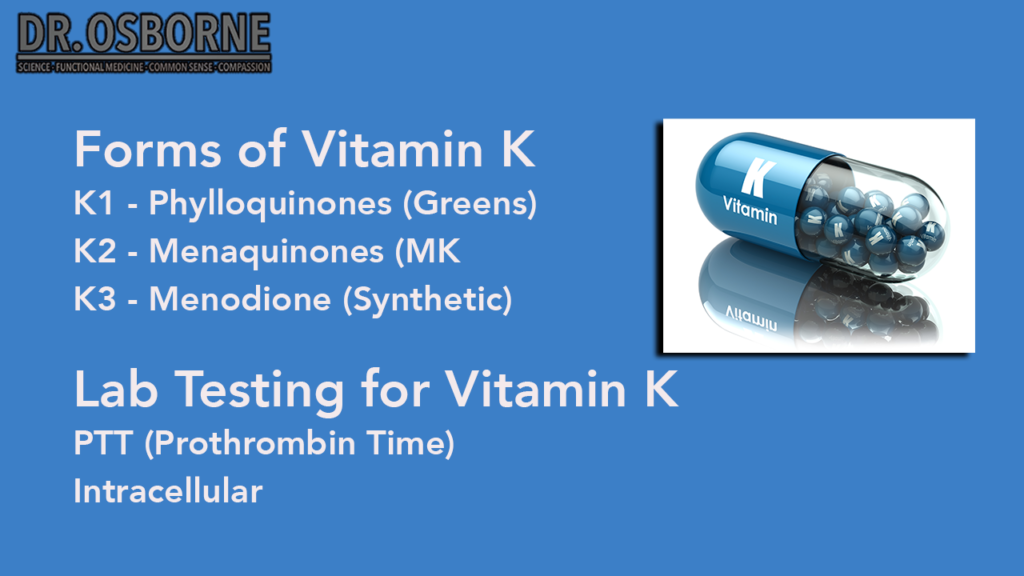
Vitamine K, which comes in three different forms, K1, K2, and K3, is a fat-soluble nutrient with no known toxicity levels in its natural form. K1 and K2 can be found in food, while K3 is a synthetic version that has been known to cause issues for consumers.
K1 is often referred to as Phylloquinoe and K2 as Menaquinone, or MK. There are several different forms of MK that are popular supplements due to their absorption efficiency. Specifically, these include MK4 and MK7.
Where Can it be Found?
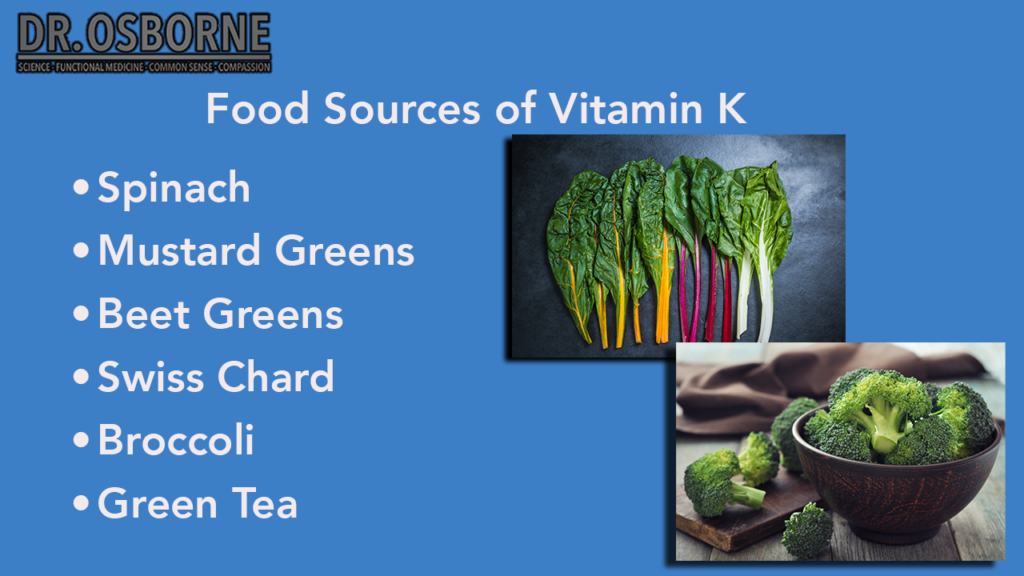
While most nutrients are going to be found in similar types of food, Vitamin K is a little different, with K1 primarily coming from plant sources, and K2 coming from animal sources. Though both forms are important, K1 has a short half-life and doesn’t store well in body tissues. Sources of Phylloquinone include dark green, leafy vegetables like kale, spinach, mustard greens, beet greens, chard, swiss chard, broccoli, asparagus, and even green tea.
K2, on the other hand, comes from cheese, eggs, and animal organ meats, like the liver. Other great sources of K2 include fermented foods like sauerkraut, soy, and Natto. While these are plant-based, fermenting the greens actually helps convert the K1 found in these items to K2. Similarly, the body will convert ingested K1 into K2 if the gut has adequate bacteria to make it happen.
How Does Vitamin K Function in the Body?
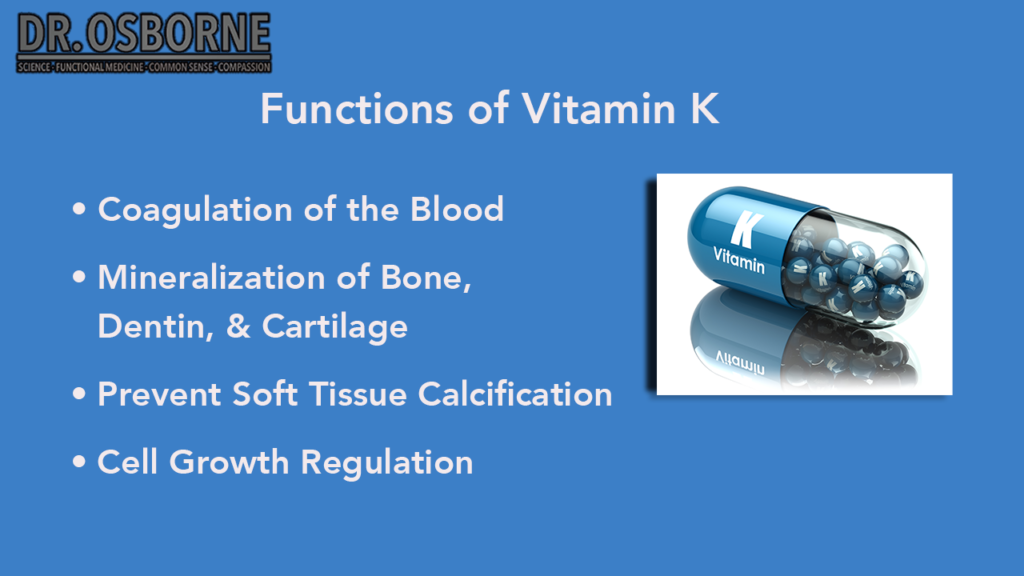
One of the most important functions of Vitamin K within the human body is blood coagulation. This is the reason newborns are given a shot of this nutrient upon birth. Without it, there is a risk of Hemorrhagic Disease, or hemorrhaging and internal bleeding when passing through the vaginal canal. An extra dose of this nutrient ensures levels are adequate and that a baby’s blood will be able to clot effectively.
However, this is not just for newborns. Adults continue to need this vitamin to clot blood and limit the risk of internal and external bleeding, as well. Apart from clotting, additional functions include:
- Encouraging bone mineralization by putting minerals into bone instead of other places. It also helps with the production of cartilage and dentin formation on teeth. Seeing the impact of Vitamin K on bone mineralization, some countries, like Japan, use it as a pharmaceutical drug to treat osteoporosis.
- Preventing the mineralization of soft tissue by not allowing calcium deposits in blood vessels which lead to atherosclerosis, or hardening or thickening of these vessels.
- Helping in the growth and regulation, or differentiation, of cells. It also has some anti-cancer and cancer-controlling impact.
Signs of Deficiency
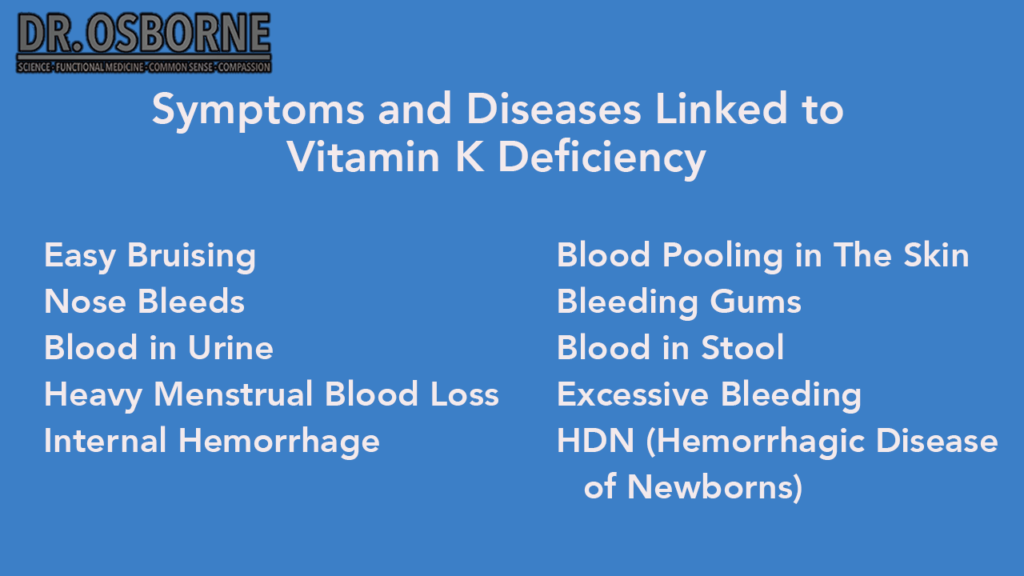
With such vital functions in the body, it seems like it would be obvious when a deficiency occurs. However, some signs aren’t necessarily visible on the outside and others can often be misdiagnosed. If suspicious of a deficiency, it’s important to check for the following signs:
- Easy bleeding or bruising
- Pooling of blood under the skin
- Spontaneous nosebleeds
- Bleeding of the gums
- Blood in urine or stool
- Black tar stools
- Internal hemorrhaging
- Lack of blood clotting
- Bone loss
- Calcified arteries leading to heart disease
- Elevated blood pressure
Causes of Deficiency
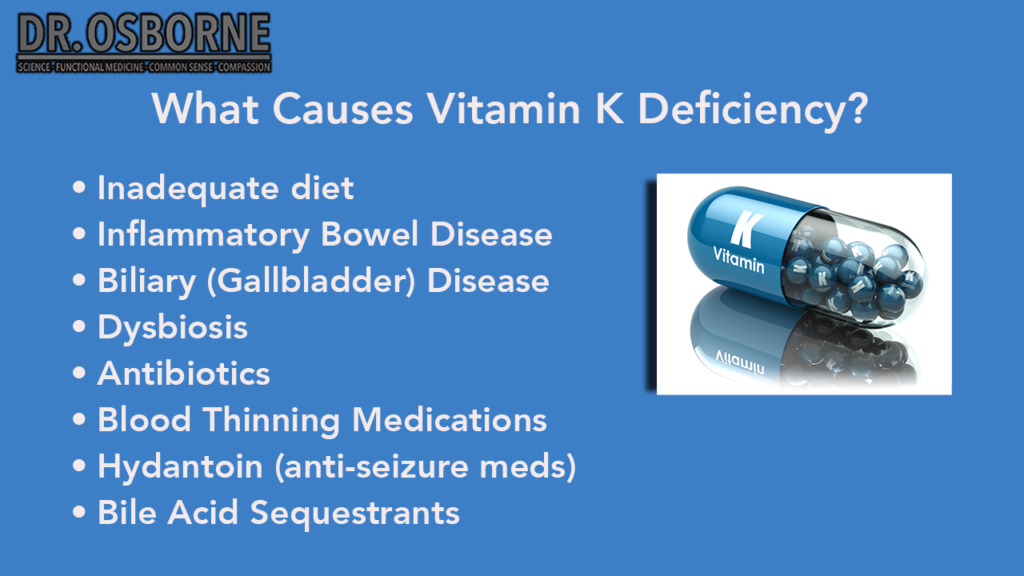
Being deficient in Vitamin K can have a serious impact on the body, so it is important to note how a deficiency is caused. One of the most common reasons for deficiency is a poor diet. This may include highly processed foods with few nutrients or animal meats that are poorly raised or fed. Additionally, consuming the fat substitute Olestra can cause the body to not absorb fat, therefore limiting the ability to take in Vitamin K.
Additionally, if a person has existing health issues like Inflammatory Bowel Disease, he or she will not be able to absorb nutrients or convert K1 to K2. Those with Liver Disease, a history of hepatitis or gallbladder and biliary problems will also not be able to have proper absorption. Lastly, those with an imbalance of bacteria in the gut, which converts K1 to K2, may experience a deficiency as well.
Deficiency Caused by Medications
Unfortunately, there are also several medications that can affect the conversion or absorption of Vitamin K. These include:
- Antibiotics – These knock out the gut flora which converts K1 to K2, with lasting effects up to two years.
- Blood Thinners – Blood thinners like Coumadin or Warfarin actually work by blocking this vitamin directly
- Staten Alternatives – These bind bile acid reducing the capacity to absorb fat and therefore Vitamin K
- Seizure Medication – These can also inhibit this nutrient
- Aspirin, White Willow Bark, and Salicylic Acid – These can interfere with blood-thinning
Additionally, there are some supplements that can thin the blood and cause one to think that he or she has a deficiency, including fish oil, Ginkgo biloba, magnesium, and Vitamin C.
Supplementing With Vitamin K
As with most nutrients, supplementing should never be the first option. Changing the diet and obtaining Vitamin K through food should be the initial step followed by a small dose of the supplement, if necessary. If one suspects a deficiency, then consider having proper testing performed.
The first test an individual can take is the PTT or Prothrombin Time. This will look at how quickly the blood clots; but as mentioned before, there are several supplements that can cause thinning of blood, so this may not be the best indicator. If a more detailed test is desired, then consider asking for a test at the intracellular level.
Be Proactive
If you feel you may have a Vitamin K deficiency, it’s vital that you be proactive. Talk to your doctor, get the tests, and start taking steps to change your diet. Catching a deficiency early can not only improve how you feel but will have a positive, lasting impact for years to come!



One Response
I’ve heard they add not so good things to vitamin k when given to newborns.