new to the gluten free journey?


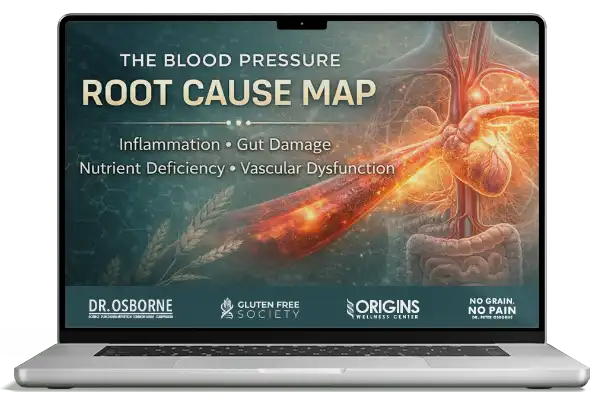
If you have high blood pressure, you have probably been told some version of this: “It runs in your family, cut back on salt, and take this medication.”
But that explanation is incomplete.
High blood pressure is usually not caused by just one thing. It is often the result of a deeper breakdown in physiology. Some of the most common triggers include:
Additionally, underlying conditions like kidney disease or sleep apnea can drive it. The truth is that blood pressure problems are often a warning sign that the body is under strain and out of balance.
The good news is that many of the root causes of high blood pressure are modifiable. In other words, this is not just about suppressing numbers. It is about understanding why the numbers are high in the first place and addressing the cause. Food matters. Mineral balance matters. Sleep matters. Sunshine matters. Stress matters. Movement matters. Inflammation matters. When you fix those, the body often begins to regulate more normally.
High blood pressure is most commonly driven by excess sodium, low potassium intake, weight gain, insulin resistance, chronic inflammation, lack of exercise, poor sleep, ongoing stress, alcohol, smoking, and sometimes underlying medical problems or medication side effects. Natural strategies that support healthy blood pressure include eating more whole foods rich in potassium and magnesium, reducing ultra-processed food, improving sleep, managing stress, getting regular movement, maintaining a healthy body weight, getting daytime light exposure, and avoiding tobacco and excess alcohol
Blood pressure is the force of your blood pushing against the walls of your arteries. When that pressure stays too high over time, it damages the lining of the blood vessels, increases the workload on the heart, and raises the risk of heart attack, stroke, kidney problems, and other serious complications. This is why high blood pressure should never be brushed off as just a number. It is a signal.
Most people have heard that salt can raise blood pressure. That is true, but it is not the whole story. The deeper issue is often the imbalance between sodium and potassium.
The modern diet is loaded with sodium because people are eating packaged food, restaurant food, sauces, deli meats, chips, fast food, canned food, and other ultra-processed products. At the same time, many are not eating enough vegetables, fruit, potatoes, beans, squash, nuts, seeds, and other whole foods that provide potassium. Potassium helps balance the effects of sodium and supports healthier blood vessel function. When sodium is high and potassium is low, blood pressure tends to rise more easily.
This is one reason why the DASH (Dietary Approaches to Stop Hypertension) eating pattern has been studied so heavily. It does not work by magic. It works because it lowers the processed-food burden and increases intake of potassium, fiber, and other nutrients that help support vascular health. NHLBI notes that DASH can lower blood pressure within weeks.
One of the most common root causes of high blood pressure is excess body fat, especially around the abdomen. When you carry more weight than your frame is designed to handle, your heart has to work harder. Your blood vessels are under more strain. Your blood sugar becomes harder to regulate. Inflammation increases. Insulin resistance becomes more common. All of these changes can drive blood pressure higher.
This is why high blood pressure is so often part of a larger metabolic picture. It travels with elevated blood sugar, increased waist circumference, fatty liver, abnormal cholesterol patterns, and chronic inflammation. If you ignore the metabolic side of blood pressure, you are missing one of the biggest drivers.
A lot of people think blood pressure is a “salt problem.” In reality, it is often an inflammation problem and a metabolic problem too.
Ultra-processed foods are typically high in sodium, refined carbohydrates, industrial additives, and poor-quality fats, while being low in magnesium, potassium, fiber, and protective phytonutrients. That combination promotes inflammation, weight gain, blood sugar instability, and vascular dysfunction. Recent research has linked higher intake of ultra-processed food with a greater risk of hypertension.
Inflammation damages the normal function of the blood vessels. Healthy arteries should be flexible. They should expand and relax. But when inflammation and oxidative stress are high, blood vessels become stiffer and less responsive. That makes it easier for pressure to build. In simple terms, inflamed blood vessels do not relax well.
One of the most overlooked causes of high blood pressure is nutritional deficiency.
Most people are taught to think about blood pressure as a sodium problem, a genetics problem, or an aging problem. But that is too simplistic. Blood pressure regulation depends on healthy blood vessels, proper nerve signaling, fluid balance, nitric oxide production, stress resilience, kidney function, and muscle relaxation. All of those processes require nutrients. When the body is running low on key vitamins, minerals, amino acids, antioxidants, or other nutritional compounds, blood pressure control can become impaired.
This is why nutrition should not be viewed as some alternative after thought. It is part of the physiology of blood pressure. Deficiencies in potassium, magnesium, folate, vitamins B6 and B12, vitamin C, vitamin D, copper, taurine, arginine, CoQ10, fiber intake, protein quality, and other nutrients have all been linked in research to blood pressure regulation, vascular tone, nitric oxide signaling, inflammation control, or sodium balance. Some studies show more meaningful reductions than others, but the larger point is that blood pressure is influenced by far more than salt alone.
For example, some nutrients appear to help by improving nitric oxide production and blood vessel relaxation, such as arginine and citrulline. Others may help calm the nervous system and reduce vascular tension, such as taurine. Some support methylation and homocysteine balance, such as folate, vitamin B6, and vitamin B12. Others support antioxidant defense and vascular protection, such as vitamin C, vitamin E, alpha lipoic acid, glycine, and CoQ10. Minerals like potassium, magnesium, copper, calcium, and zinc help regulate vascular tone, electrolyte balance, and cellular communication. Even dietary fiber and adequate protein intake may support better blood pressure control through improved metabolic health, insulin sensitivity, and body composition.
The chart below lists key nutrients and their impact on nutrition in human studies:
Nutrients and Blood Pressure Reduction in Hypertensive Patients (Ordered by Maximum Systolic Effect)
| Nutrient | Systolic BP Reduction Range (mmHg) | Diastolic BP Reduction Range (mmHg) | Clinical Findings & Human Study Context |
| CoQ10 | 3.7 – 17.0 | 2.0 – 10.0 | Highly effective in lowering blood pressure; a meta-analysis of randomized controlled trials demonstrated that CoQ10 can decrease systolic blood pressure by 16.6 mmHg and diastolic blood pressure by 8.2 mmHg. |
| Taurine | 3.0 – 15.0 | 3.0 – 7.0 | Suppresses the sympathetic nervous system; a double-blind, placebo-controlled trial found that taking 1.6 g/day of taurine significantly decreased clinic SBP by 7.2 mmHg and DBP by 4.7 mmHg in prehypertensive individuals. |
| Vitamin E | 0.88 – 14.14 | 0.0 – 2.0 | A network meta-analysis of randomized controlled trials indicated that vitamin E was significantly more effective than placebo, achieving a mean SBP reduction of 14.14 mmHg. |
| Folate (B9) | 3.0 – 13.0 | 1.5 – 7.0 | Highly effective for patients with treatment-resistant hypertension; dietary folate intake is significantly and negatively associated with the prevalence of hypertension, exhibiting a strong protective effect with a multivariate-adjusted odds ratio of 0.61 for those in the highest quartile of intake. |
| Vitamin B12 | 2.0 – 13.0 | 1.4 – 7.0 | Manages homocysteine levels; higher intake of Vitamin B12 is significantly linked to a lower risk of hypertension in national population-based studies (odds ratio of 0.84). |
| Vitamin B6 | 2.0 – 13.0 | 0.73 – 7.0 | Dietary intake is significantly and negatively associated with hypertension prevalence, showing a protective odds ratio of 0.65 in the highest quartile of intake. |
| Arginine | 4.0 – 11.0 | 3.7 – 4.9 | Oral L-arginine acts as a direct substrate for nitric oxide (NO) and effectively reduces pressures in borderline hypertensives. |
| Copper | 2.0 – 10.0 | 1.5 – 8.0 | In patients with stable moderate hypertension, supplementation with 5 mg of copper per day can significantly decrease both systolic and diastolic blood pressures. |
| Vitamin C | 1.8 – 9.9 | 0.0 – 4.4 | A randomized trial in type 2 diabetic patients demonstrated an SBP drop of 9.9 mmHg and a DBP drop of 4.4 mmHg. Other meta-analyses in essential hypertension groups confirm average SBP reductions of 3.84 to 4.85 mmHg and DBP reductions of 1.48 to 1.67 mmHg. |
| Citrulline | 1.35 – 9.0 | 0.0 – 2.75 | Bypasses the liver to convert to arginine; meta-analysis data show a pooled mean reduction of 4.10 mmHg for SBP and 2.08 mmHg for DBP. Subgroup analysis reveals that doses ≥6 g/day result in a significant 2.75 mmHg reduction in DBP. |
| Vitamin B1 | 0.0 – 7.71 | 0.0 – 5.66 | Higher intakes correspond to protective blood pressure effects, especially in older individuals. |
| Magnesium | 2.0 – 7.68 | 0.8 – 4.75 | Acts as a calcium channel blocker; when combined with potassium, mineral salt supplementation has shown statistically significant SBP reductions up to 5.8 mmHg and DBP drops of 3.8 mmHg. |
| Protein | 4.0 – 5.9 | 2.0 – 3.0 | In treated hypertensives, replacing dietary carbs with protein to 25% of total energy resulted in a net reduction of 5.9 mmHg in 24-hour ambulatory systolic blood pressure. |
| Fiber | 1.13 – 5.9 | 1.26 – 3.1 | Supplementing with soluble fiber (such as psyllium) yielded a 5.9 mmHg net reduction in SBP in treated hypertensives. High-certainty meta-analysis data specific to hypertensive patients confirm average reductions of 4.3 mmHg SBP and 3.1 mmHg DBP, though pooled effects across broader populations average 1.13 mmHg SBP. |
| Potassium | 2.4 – 5.9 | 0.6 – 3.4 | Functions as a highly effective natriuretic agent; combined with magnesium, it can yield up to a 5.8 mmHg drop in SBP. |
| Lipoic Acid (ALA) | 0.0 – 5.46 | 0.0 – 3.36 | Highly dependent on body weight; a dose-response meta-analysis demonstrated that ALA supplementation significantly reduces SBP by a weighted mean difference of 5.46 mmHg and DBP by 3.36 mmHg. |
| Vitamin D | 2.83 | 1.64 | While a meta-analysis of the general population showed no significant SBP reduction (0.00 mmHg), patients specifically suffering from hypovitaminosis D and hypertension experienced significant reductions of 2.83 mmHg SBP and 1.64 mmHg DBP. |
| Glycine | 2.20 | 1.00 – 1.05 | Generates elastin and scavenges free radicals; population-based analyses show that higher glycine intake is linked to a mean difference reduction of 2.20 mmHg in SBP and 1.00 mmHg in DBP. |
| Calcium | 0.7 – 2.1 | 0.4 – 2.04 | Suppresses parathyroid hormone; while standalone SBP reductions are often modest, one meta-analysis reported a significant drop in DBP of 2.04 mmHg. |
| Zinc | 1.0 – 1.49 | 0.0 – 1.0 | Dietary zinc intake is inversely associated with hypertension in certain populations, with the risk of developing the condition decreasing by 1% for every 1 mg increase in daily intake. |
| Iron | 1.39 | N/A | Cross sectional study showed dietary iron increase was associated with lower systolic blood pressure. |
| Resveratrol | 5.77-11.9 | 1.22-3.55 | Meta analysis of controlled human trials show higher doses (150 mg +) has significant blood pressure lowering effects. |
Note that depending on the nutrient the blood pressure lowering effect can vary widely. This is one of the biggest points of contention in nutrition research. Many blood pressure studies on vitamins and minerals produce mixed results not because nutrients are ineffective, but because the researchers often fail to identify which patients actually need which nutrients. You cannot expect a nutrient to perform well when it is given blindly to a mixed population. If a person is not deficient, the response may be minimal. If another person is profoundly deficient, the response may be significant. That is why individualized testing matters. Nutrition works best when you stop guessing, identify the deficiencies, and give the body what it is truly missing.
That is also why some studies show modest average benefits while individual patients can experience much stronger results. When researchers group together people with very different diets, different medication histories, different absorption problems, different inflammatory burdens, and different nutrient status, the average result can look diluted. But in the real world, personalized nutrition often works far better than population averages suggest.
The real message here is simple: high blood pressure can be a sign that the body is undernourished, inflamed, or metabolically overwhelmed. If you want to support healthier blood pressure naturally, it makes sense to look deeper. Do not just ask whether you should take a supplement. Ask whether your body is missing something it needs to regulate pressure properly in the first place.
If you are sleeping 5 or 6 hours a night and wondering why your blood pressure stays elevated, sleep may be one of the most important missing pieces.
Short sleep duration is associated with a higher risk of hypertension, and sleep apnea is a well-recognized secondary cause of high blood pressure. Poor sleep raises stress hormones, worsens insulin resistance, increases inflammation, and disrupts the normal drop in blood pressure that should happen overnight.
This is why sleep is not optional. It is therapy. If your sleep is broken, shallow, or too short, your blood pressure plan is incomplete.
Stress matters. Not because stress management is a new health and wellness trend, but because chronic stress changes physiology.
When you are under constant pressure, your nervous system stays activated and cortisol levels climb.
In other words, chronic stress not only raises blood pressure in the moment, it creates the exact lifestyle pattern that keeps blood pressure elevated over time.
Stress-management techniques are not weak advice. They are root-cause advice. Breathing work, prayer, time outdoors, mindfulness, counseling, journaling, and other recovery practices may help lower the physiologic burden of stress and support healthier blood pressure regulation.
Your heart and blood vessels were designed for movement. Sitting all day, every day, is not neutral. It pushes physiology in the wrong direction.
A sedentary lifestyle contributes to weight gain, insulin resistance, poor circulation, poor stress regulation, and worsening vascular function. Regular movement helps the blood vessels respond better, improves blood sugar handling, supports better sleep, and lowers the burden on the cardiovascular system.
This is why walking, strength training, cycling, swimming, mobility work, and other regular physical activity can have such a meaningful impact on blood pressure. Consistency beats intensity.
If you are smoking, vaping nicotine, or drinking heavily, those behaviors can absolutely work against healthy blood pressure.
Alcohol can raise blood pressure, especially in excess. Smoking damages blood vessels, promotes inflammation, and raises cardiovascular risk.
Air pollution has also been linked to elevated blood pressure. According to the EPA, indoor air quality issues are a major health risk. Consider filtering your indoor air environment using HEPA filters to improve your indoor air quality.
You cannot expect optimal blood pressure while routinely feeding the body substances that increase vascular stress and inflammation.
Sometimes high blood pressure is a symptom of another problem. Chronic kidney disease, sleep apnea, thyroid dysfunction, metabolic syndrome, and some medications can all contribute. That is why persistent hypertension deserves evaluation.
This is also why root-cause medicine matters. You do not want to assume your blood pressure is “just genetic” when there may be a secondary issue driving it. Make sure you talk with your doctor about looking deeper.
Yes, the research suggests gluten can be a contributing factor in some people, especially those with celiac disease and possibly other gluten-related disorders. The strongest mechanisms are chronic inflammation, endothelial dysfunction, arterial stiffness, elevated homocysteine, and malabsorption of key nutrients such as folate, vitamin B12, vitamin B6, vitamin D, magnesium, zinc, and iron.
Several studies have found higher inflammatory markers, higher homocysteine, and worse vascular function in people with celiac disease.
If you have a family history of gluten sensitivity or celiac disease, talk with your doctor about additional testing to help rule this out as a potential driver of blood pressure problems.
Yes. Research indicates that hidden food sensitivities, allergies, and dietary intolerances can induce chronic inflammation and elevated blood pressure. It doesn’t stop at blood pressure. Researchers at the University of Virginia are finding the following:
“Sensitivity to common food allergens such as dairy and peanuts could be an important and previously unappreciated cause of heart disease, new research suggests – and the increased risk for cardiovascular death includes people without obvious food allergies.”
Reactions to some food allergies can be obvious – hives, skin rash, and swelling of the face and neck. Food sensitivities and intolerances can be more difficult to identify, often leading to silent inflammation that contributes to increased blood pressure.
Talk with your doctor about measuring food sensitivities.. Make sure to enquire about IgE, IgG, IgG4, and IgA blood tests. These labs help to identify the spectrum of food-inflammation reactions.
In my clinical experience, dairy, sugar, eggs, and soy are some of the most common culprits.
If you want to lower high blood pressure naturally, the goal is not to chase one magic supplement or obsess over one single behavior. The real goal is to remove the things that are driving pressure up while restoring the things the body needs to regulate pressure properly. That includes better food, better mineral balance, better sleep, lower inflammation, less stress, more movement, and targeted support for nutritional deficiencies.
The foundation of natural blood pressure support is a whole-food diet. That means eating more clean meats, fruits,vegetables, nuts, seeds, and other minimally processed foods while reducing the ultra-processed products that are loaded with sodium, refined starch, poor-quality fats, and empty calories. This one shift alone can help improve potassium intake, magnesium intake, fiber intake, antioxidant intake, blood sugar control, body composition, and inflammation, all of which influence blood pressure.
Food matters because blood pressure is not just a sodium issue. It is also a nutrient-density issue. When the body is underfed in key vitamins, minerals, amino acids, and antioxidants, blood vessel function can suffer. Vascular tone, nitric oxide production, electrolyte balance, methylation, insulin sensitivity, and stress resilience all depend on adequate nutrition.
If you are eating well and still struggling, consider testing for food sensitivities. Because the wrong food can be a driver of silent inflammation.
This is where many people miss the mark. They may be told to “eat better,” but no one helps them identify what they are actually missing. The nutrient table shared above makes this point clearly: blood pressure support in the research has been linked to a wide range of nutrients, not just magnesium. Nutrients such as CoQ10, taurine, folate, vitamin B12, vitamin B6, arginine, copper, vitamin C, citrulline, vitamin B1, potassium, alpha lipoic acid, vitamin D, calcium, zinc, fiber, and adequate protein have all shown varying degrees of support in human blood pressure research.
Some of these help by improving nitric oxide production and blood vessel relaxation, such as arginine and citrulline. Some help support the nervous system and calm sympathetic overdrive, such as taurine. Some help reduce oxidative stress and protect the vascular lining, such as vitamin C, CoQ10, and lipoic acid.
Others help with methylation and homocysteine balance, such as folate, vitamin B6, and vitamin B12. Minerals like potassium, copper, calcium, zinc, and magnesium support electrolyte balance, vascular tone, and cellular communication. Even fiber and sufficient protein intake can help improve blood pressure by supporting better metabolic health, blood sugar control, satiety, and body composition.
This is one of the biggest problems with mainstream nutrition advice and one of the biggest limitations in many blood pressure studies. Mixed results do not automatically mean nutrients are ineffective. In many cases, they may reflect poor study design. Researchers often give the same nutrient to a large mixed group of people without identifying who is actually deficient and who is not. That dilutes the outcome.
If a person is low in vitamin D, low in magnesium, low in potassium, or low in folate, targeted support may help. If another person already has adequate levels, the effect may be much smaller. That is why the smartest approach is not to guess. It is to test, identify the deficiencies, and then target the nutrients the body actually needs.
Healthy blood pressure depends in part on the ability of blood vessels to open and relax. This is where nutrients involved in nitric oxide production and vascular tone become important. Arginine and citrulline are especially relevant because they help support nitric oxide pathways. Potassium and magnesium also support vascular relaxation and healthier electrolyte balance. Copper and vitamin C contribute to vascular structure and function, and taurine appears to help calm excessive sympathetic nervous system activity.
Inflamed blood vessels do not regulate pressure well. That is why antioxidants and anti-inflammatory nutrients deserve attention. The table you shared highlights support for nutrients such as vitamin C, CoQ10, alpha lipoic acid, glycine, and vitamin E. These compounds may help reduce oxidative stress, protect the vascular lining, and support healthier endothelial function.
This is also where food quality matters. A whole-food diet rich in colorful produce, quality protein, and minimally processed ingredients supports a far better antioxidant and anti-inflammatory environment than a diet built on packaged food and restaurant meals.
For some people, blood pressure issues are linked in part to poor methylation and higher homocysteine levels. This is where folate, vitamin B6, and vitamin B12 become important. These nutrients help regulate homocysteine metabolism, and your table shows strong supportive associations for each of them in blood pressure research.
Natural blood pressure support is not only about micronutrients. It is also about macronutrient quality. Fiber intake helps with satiety, blood sugar regulation, metabolic health, and gut function. Adequate protein intake helps support lean body mass, appetite regulation, and better body composition. Your table includes both fiber and protein as supportive factors in hypertensive patients, which reinforces the larger point that a nutrient-dense diet does far more than simply avoid sodium.
You cannot out-supplement poor sleep, chronic stress, total inactivity, and a life lived indoors. Nutritional support works best when it is built on the right lifestyle foundation. Deep sleep supports blood pressure regulation. Stress management helps calm the nervous system. Movement improves insulin sensitivity, vascular function, and body composition. Daytime light exposure helps support circadian rhythm, which helps support better sleep and recovery. These lifestyle inputs are not secondary. They are part of the treatment plan.
If you want to lower blood pressure naturally, think bigger than sodium. Think root cause. Think inflammation. Think nutrient density. Think food sensitivities. Think metabolic health. Think nervous system balance. Think individualized deficiencies.
Start by cleaning up the diet. Reduce processed food. Increase whole foods. Improve potassium, magnesium, fiber, and protein intake. Test for nutritional deficiency gaps instead of guessing. Use targeted support where deficiencies exist. Then build the rest of the foundation with better sleep, better stress management, more movement, and consistent daylight exposure.
That is how you create a real natural blood pressure strategy. Not by chasing one pill, but by giving the body what it needs to regulate pressure the way it was designed to.
Weight loss is one of the most effective natural ways to lower blood pressure. You do not have to become perfect. Even modest reductions in body fat can lower vascular strain and improve metabolic health, and lower blood pressure.
Walking after meals, lifting weights, riding a bike, swimming, stretching, and simply breaking up long sitting periods can all help. Your body needs regular movement to regulate blood sugar, calm stress chemistry, and support vascular health.
Sleep deprivation pushes blood pressure in the wrong direction. Protecting sleep is one of the most powerful and underused natural interventions available. If you snore, wake tired, or have stubborn blood pressure despite doing everything else right, get evaluated for sleep apnea.
Stress management should be daily, not occasional. Breathing drills, prayer, meditation, gratitude, time outside, counseling, and reducing unnecessary stimulation can all help lower the burden on your nervous system. If stress is constant, blood pressure will often reflect that.
Sunshine is not just about vitamin D. Daytime light exposure helps anchor circadian rhythm, which helps regulate sleep, hormones, and recovery. Some research also suggests sunlight may support vascular health through nitric oxide-related pathways. The safest and strongest clinical point is that daytime light supports better circadian rhythm, and better circadian rhythm supports better sleep. Better sleep helps support healthier blood pressure.
If your goal is better blood pressure, tobacco needs to go, and alcohol needs to be reduced or eliminated if it is excessive. These are two of the clearest lifestyle levers you can pull.
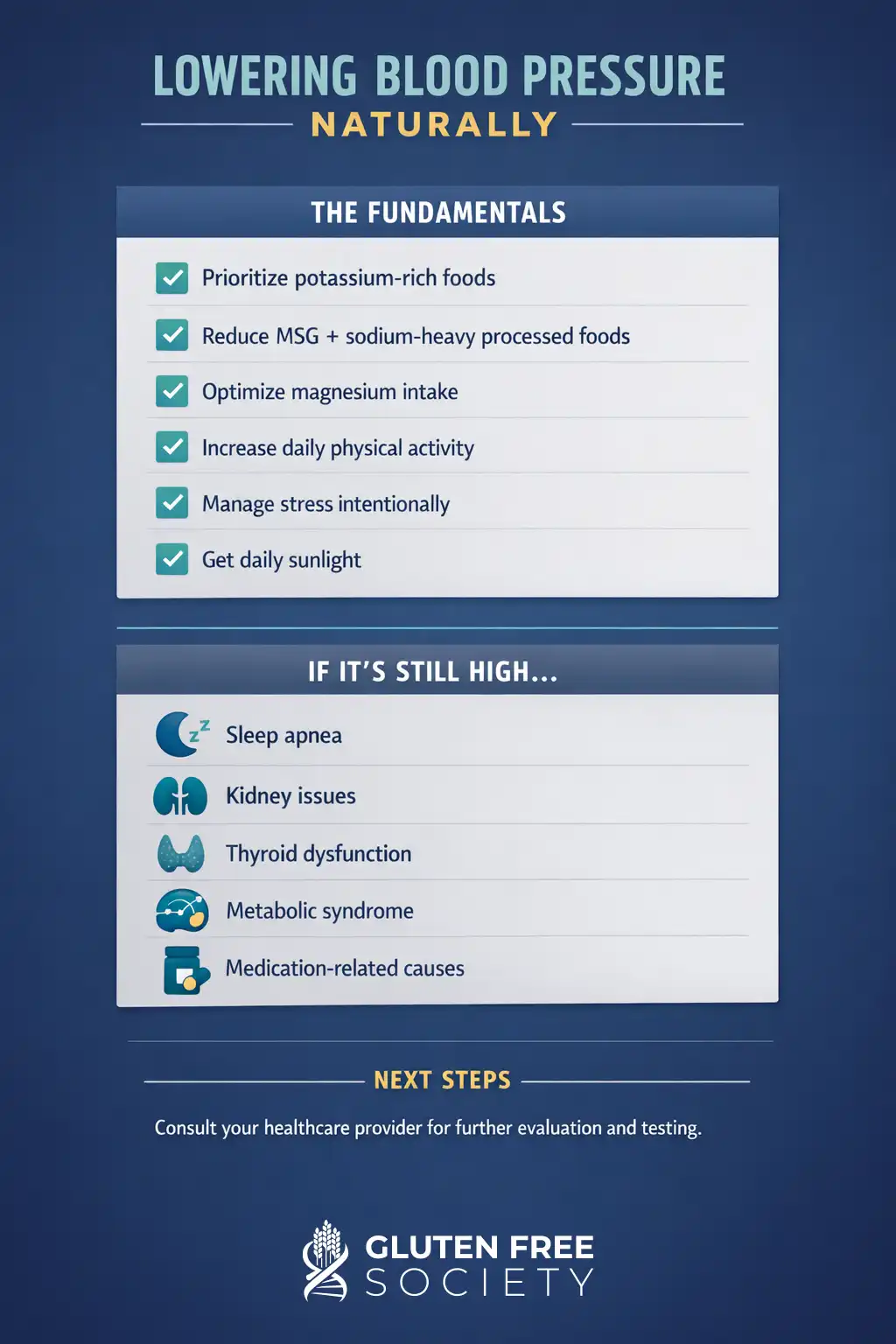
If you want to lower blood pressure naturally, focus on the fundamentals.
Clean up MSG/sodium-heavy processed foods.
Eat more potassium-rich whole foods.
Support magnesium intake.
Lose excess body fat.
Move your body every day.
Sleep deeply and long enough.
Manage stress on purpose.
Get daylight.
Avoid smoking and eliminate alcohol.
And if your blood pressure stays high, get evaluated for sleep apnea, kidney issues, thyroid dysfunction, metabolic syndrome, and medication-related causes.
There usually is not just one cause. The most common pattern is a combination of excess sodium, low potassium intake, excess body fat, insulin resistance, poor sleep, stress, inactivity, alcohol, smoking, and genetic tendency.
They can contribute. Potassium plays a major role in blood pressure regulation, and magnesium appears to support healthy vascular tone and blood pressure in some people, especially when intake is low.
Foods that are rich in potassium, magnesium, fiber, and other protective nutrients are the best place to start. Think vegetables, fruit, beans, potatoes, squash, nuts, seeds, and minimally processed meals built from whole ingredients.
Yes. Short sleep duration is associated with greater hypertension risk, and sleep apnea is a recognized cause of secondary hypertension.
Yes. Stress can raise blood pressure directly in the short term and can also worsen the habits that keep blood pressure elevated over time, including poor sleep, alcohol use, smoking, overeating, and inactivity.
Yes. Gluten is not a primary universal cause of hypertension. But in people with celiac disease or gluten-related disorders, nutrient malabsorption and inflammation may indirectly affect blood pressure and cardiovascular health.






9 Responses
Does gluten cause blood pressure
And brochieastis? Get phlegm and bad cough approx 4 times a year.
Treated with Duratoss and antibiotic.
Does gluten cause high blood pressure?
I am on a high BP medication for the last 30 years …4 weeks in a gluten free diet it’s now normal…(circa two weeks) physiological or diet related who knows …also maybe a blip 😉
From my personal experience, yes it does. Normal BP is around average 120/78. Two days of eating oats, rice and veg & BP elevated to 150/105 average. Keto-carnivore diet works well for me & my blood type is O positive.
How did oats rice and veggies increase it? Those are gluten free food.
I have only just cut out gluten, and my blood pressure has dropped down big time. Cut out gluten in every way you can.👍
I’m beginning to wonder if gluten is playing a part in my autoimmune disorder (giant cell arteritis) as well as my high blood pressure. Know anything about this?
Yes, gluten has been linked to arteritis – https://pubmed.ncbi.nlm.nih.gov/21794827/
…and yes gluten has been linked to blood pressure and cardiovascular issues – https://env-gfsociety-staging.kinsta.cloud/what-causes-high-blood-pressure/
Hope this helps!
All the best,
Dr. O
Yes! I just went thru that. I kept having an allergic response.good pressure kept th King sky high. Drs didn’t help only prescribed me a script. I got off gluten and my pressure went right down.