new to the gluten free journey?


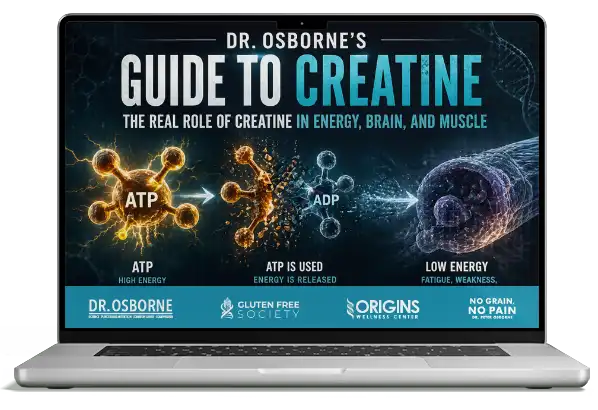
Creatine is one of the most researched supplements in human nutrition. It helps your body regenerate ATP, the energy currency your muscles, brain, heart, gut, and nervous system depend on. The strongest evidence supports creatine monohydrate for improving strength, lean muscle, exercise performance, recovery, and healthy aging. Research also suggests benefits for cognitive function, blood sugar regulation, gut inflammation, traumatic brain injury recovery, fibromyalgia, and osteoarthritis.
For most adults, the practical daily dose is 3 to 5 grams of creatine monohydrate per day. A loading phase of about 20 grams per day for 5 to 7 days can saturate muscles faster, but it is not required. Ultra Creatine is my preferred creatine because it uses micronized creatine monohydrate, is unflavored and unsweetened, and is gluten free, grain free, soy free, dairy free, non-GMO, and suitable for vegetarians and vegans.
Creatine is a natural compound your body makes from amino acids, primarily glycine, arginine, and methionine. It is produced mainly in the liver and kidneys, then stored primarily in skeletal muscle. About 95% of the body’s creatine is found in muscle tissue, with smaller but important amounts found in the brain, heart, and other high-energy tissues.
Creatine’s main job is to help regenerate adenosine triphosphate, or ATP. ATP is your body’s usable energy. When ATP gets used, it loses a phosphate group and becomes ADP. Creatine, in its stored form as phosphocreatine, helps donate phosphate back to ADP so ATP can be regenerated quickly. This matters because your muscles and brain do not run on motivation. They run on energy.
That is why creatine has been studied not only in athletes, but also in older adults, women, people with metabolic dysfunction, cognitive stress, traumatic brain injury, fibromyalgia, and inflammatory conditions.
The biggest mistake people make with creatine is thinking of it as a “gym supplement.” It does so much more.
Creatine is really an energy-support nutrient. Muscle contraction, brain signaling, gut barrier repair, immune regulation, detoxification, and tissue healing all require energy. When cells cannot make or recycle energy efficiently, fatigue, weakness, poor recovery, brain fog, and loss of resilience often follow.
Creatine supports the phosphocreatine system, one of the body’s fastest ways to replenish ATP during energy-demanding states. This is why creatine is so useful during short bursts of effort like lifting weights or sprinting, but the same principle applies to any tissue under stress. The body heals, repairs, detoxifies, and adapts better when energy production is supported.

The best-known benefit of creatine is improved muscle performance. Creatine monohydrate helps increase phosphocreatine stores in muscle, which allows the body to regenerate ATP more efficiently during intense activity. This can translate into better strength, better power output, and improved training adaptations.
This is especially important after age 40, because muscle is not just about looking fit. Muscle is a metabolic organ. It helps regulate blood sugar, protects joints, supports bone, improves mobility, and reduces frailty risk as we age. Loss of muscle with aging, often called sarcopenia, is one of the biggest predictors of loss of independence in older adults.
Creatine works best when paired with resistance training. The research consistently shows that creatine plus strength training is more powerful than either strategy by itself for building and maintaining lean mass and strength.
Dr. Osborne takeaway: If you are over 40 and trying to maintain muscle, creatine should be on your short list. Do not wait until you are weak, frail, or losing muscle before you support the energy system that helps muscle work.
One of the common reasons people stop exercising is that they get too sore. They work out hard, then spend the next three days walking like they fell down a flight of stairs. That soreness is not just “weakness.” It reflects muscle stress, inflammation, oxidative damage, and repair demand.
Creatine may help support recovery by improving muscle energy availability and reducing markers of muscle damage after strenuous activity. Reviews of the literature describe potential anti-inflammatory and anti-catabolic effects, meaning creatine may help reduce excessive inflammation and slow the breakdown of muscle tissue under stress.
This does not mean creatine replaces sleep, protein, hydration, or smart programming. It means creatine can be a powerful tool in your recovery toolbox.
Your brain is an energy hog. It represents only a small percentage of your body weight, yet it demands a tremendous amount of ATP. That is one reason creatine is being studied for cognition, memory, mental fatigue, and neurological resilience.
A 2024 systematic review and meta-analysis concluded that creatine monohydrate supplementation may have beneficial effects on cognitive function in adults. Earlier systematic reviews also found potential cognitive benefits, particularly in situations where the brain is under energy stress, such as sleep deprivation, aging, or low dietary creatine intake.
Creatine is not a stimulant. It does not work like caffeine. It does not whip the adrenal glands. It supports the energy infrastructure your brain uses to function.
Who may benefit most? Older adults, vegetarians, vegans, people under high cognitive demand, people with poor sleep, and those dealing with chronic fatigue may be more likely to notice brain-related benefits because their baseline creatine availability may be lower or their energy demands may be higher.
Creatine also has interesting research in glucose metabolism. In a randomized, double-blind, placebo-controlled trial in people with type 2 diabetes, creatine supplementation combined with exercise improved glycemic control. The proposed mechanism involved greater GLUT-4 recruitment to the muscle cell membrane. GLUT-4 acts like a doorway that allows glucose to move from the bloodstream into muscle cells.
This is important because muscle is one of the major places your body stores and burns glucose. More muscle, better muscle function, and better glucose transport can all support healthier blood sugar metabolism.
Now, creatine is not a substitute for a clean diet, strength training, sleep, or correcting nutrient deficiencies. But for people already exercising and working on metabolic health, creatine may provide added support.
Aging is not just a calendar problem. It is an energy problem, a muscle problem, a mitochondrial problem, and a recovery problem.
Creatine supports several systems that commonly decline with age: muscle mass, strength, power, physical function, and possibly cognitive resilience. The International Society of Sports Nutrition has described creatine as a safe and effective supplement for exercise, sport, and certain health contexts when used appropriately.
For older adults, the best results generally come when creatine is paired with resistance training. Think of creatine as helping load the battery, while resistance training tells the body what to do with that energy: build, repair, strengthen, and adapt.
Bone is living tissue. It responds to mechanical stress, hormones, protein status, minerals, inflammation, and energy availability. Since creatine supports muscle strength and training performance, it may indirectly support bone by helping people train harder, recover better, and maintain more lean mass.
The bone research is mixed but promising. A two-year randomized controlled trial in postmenopausal women studied creatine monohydrate with exercise for bone health, and the broader literature suggests creatine may be most useful for bone when it is part of a resistance training program rather than taken in isolation.
That distinction matters. If someone takes creatine but remains sedentary, they should not expect the same bone or muscle benefits as someone taking creatine while lifting, walking, carrying, squatting, pushing, and pulling.
In a randomized, double-blind, placebo-controlled trial of postmenopausal women with knee osteoarthritis, creatine supplementation combined with strengthening exercises improved physical function, lower limb lean mass, and quality of life. The protocol used 20 grams per day for one week followed by 5 grams per day thereafter.
That is clinically relevant because many people with knee pain avoid exercise. Then weakness worsens. Then pain worsens. Then mobility declines. Creatine does not rebuild cartilage like magic, but it may help support the muscle and energy side of the equation so people can better tolerate the strengthening work that protects joints.
Fibromyalgia is often treated like it is only a pain disorder, but many patients also struggle with fatigue, exercise intolerance, weakness, poor sleep, and impaired recovery.
A 16-week randomized, double-blind, placebo-controlled trial investigated creatine supplementation in fibromyalgia patients. The study found that creatine increased intramuscular phosphorylcreatine content and improved measures of muscle function.
This is exactly where creatine makes sense from a functional medicine perspective. If the body is struggling to generate energy, support the energy system. That does not mean creatine is the only answer. It means creatine may be one foundational tool in a broader plan that also addresses diet, nutrient deficiencies, gluten sensitivity, sleep, mitochondrial stress, toxins, hormones, and inflammation.
Creatine supplementation may aid recovery from traumatic brain injury (TBI) by boosting brain energy metabolism, reducing neuroinflammation, and lowering oxidative stress. Human studies indicate it can help mitigate symptoms like headache, dizziness, and fatigue, while potentially protecting against secondary neuronal damage.
The brain-energy connection is real and worth discussing with a knowledgeable clinician, especially after head trauma.
Creatine is found mainly in animal foods, especially meat and fish. Plant-based diets generally provide little to no dietary creatine. That means vegetarians and vegans often have lower baseline creatine stores and may have more room to benefit from supplementation.
This is also why some people eating low-protein or overly restrictive diets may struggle with fatigue, weakness, poor recovery, and loss of muscle. You cannot build a high-energy body out of low-energy raw materials.
A vegetarian or vegan diet may be chosen for many reasons, but from a nutritional standpoint, creatine is one of the compounds that should be intentionally replaced.

Creatine is not an anabolic steroid. It is not testosterone. It is not a hormone. It is a naturally occurring compound made from amino acids and found in food. The confusion comes from its popularity in bodybuilding, but popularity in the gym does not make this nutrient a drug.
One of the most common myths is that creatine damages the kidneys. The available evidence does not support this claim in healthy people using recommended doses. The International Society of Sports Nutrition and related reviews have concluded that creatine supplementation is safe when used appropriately in healthy individuals.
That said, people with known kidney disease may want to consider working with a doctor to monitor their kidney function.
The available evidence does not support a direct link between creatine supplementation and hair loss. This myth largely comes from confusion between creatine and hormone-altering anabolic drugs.
Creatine does not increase fat mass. Research actually shows that creatine combined with resistance training can reduce body fat. Some people gain scale weight because creatine helps pull water into muscle cells and can support lean mass gains.
Research does not support the idea that creatine causes dehydration or muscle cramping when used properly. That being said, if you are training hard, sweating, using saunas, fasting, or eating low carbohydrate, you need to be intentional with water and electrolytes.

There are many fancy forms of creatine on the market: buffered creatine, creatine hydrochloride, liquid creatine, creatine nitrate, and others. The problem is that “fancier” does not always mean better.
Creatine monohydrate is the most researched, most reliable, and most cost-effective form. The International Society of Sports Nutrition notes that creatine monohydrate is the form with the strongest evidence base.
For most people, the best creatine supplement is simple:
Creatine monohydrate. No sugar. No dyes. No artificial sweeteners. No gluten containing fillers. No unnecessary junk.
That is why I recommend Ultra Creatine. It uses micronized creatine monohydrate, is unflavored and unsweetened, mixes easily into water or smoothies, and is gluten free, grain free, soy free, dairy free, non-GMO, and suitable for vegetarians and vegans. The recommended use is one 5-gram scoop daily.
A creatine powder loaded with sweeteners, flavors, dyes, grain derived fillers, or mystery additives is not recommended. Especially for people with gluten sensitivity, celiac disease, autoimmunity, or chronic inflammatory problems.
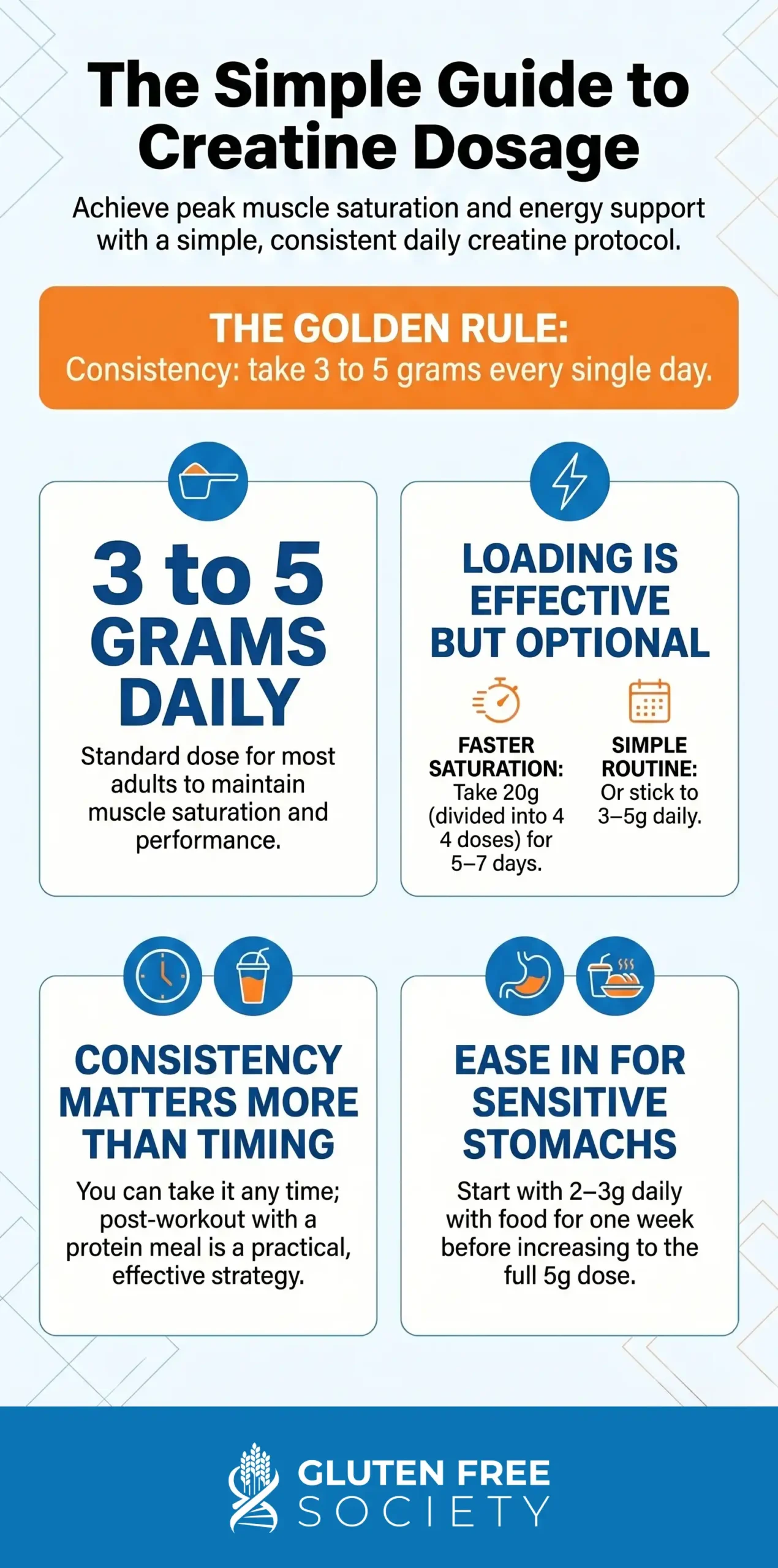
For most adults, the practical dose is:
3 to 5 grams of creatine monohydrate per day
This dose is commonly used to maintain saturation over time and is consistent with many research and sports nutrition recommendations.
A loading phase can be used when someone wants faster tissue saturation:
20 grams per day, divided into 4 doses, for 5 to 7 days
After the loading phase, drop to 3 to 5 grams per day. Loading is not mandatory. It simply saturates muscle stores faster. Some people get digestive discomfort from loading, so starting with 3 to 5 grams daily is perfectly reasonable.
Creatine can be taken any time of day. Consistency matters more than timing. For training support, taking creatine after a workout with water or a protein-containing meal is a practical strategy.
Some people notice better training performance or recovery within the first couple of weeks. Others notice gradual improvement over a month or two. Creatine works by saturation, so consistent daily use matters most if you are looking to see benefits.
Creatine is naturally found in animal foods, especially:
| Food | Creatine Relevance |
| Beef | One of the better dietary sources |
| Bison | Rich in amino acids and creatine-supportive nutrients |
| Lamb | Provides creatine and amino acid building blocks |
| Salmon | Contains creatine plus omega-3 fats |
| Tuna | Contains creatine and protein |
| Herring | One of the richer fish sources |
| Chicken and turkey | Moderate creatine sources |
Even with a good diet, supplemental creatine can still be useful because the therapeutic and performance-supportive doses used in studies are difficult to consistently obtain from food alone without eating very large amounts of meat or fish.
Creatine may be especially useful for people who want to support:
| Goal or Health Concern | Why Creatine May Help |
| Muscle weakness | Supports ATP regeneration and training adaptation |
| Healthy aging | Helps maintain strength, power, and lean mass |
| Exercise recovery | Supports muscle energy and may reduce markers of damage |
| Brain fog or cognitive stress | Supports brain energy metabolism |
| Vegetarian or vegan diet | Helps replace low dietary creatine intake |
| Blood sugar support | May improve glucose handling when paired with exercise |
| Osteoarthritis | May improve function when paired with strengthening |
| Fibromyalgia | Human trial evidence suggests improved muscle function |
| Bone health | May support training capacity and lean mass, which influence bone |
| Post-injury recovery | Human TBI studies suggest brain-energy support potential |
Many women avoid creatine because they think it will make them bulky. That fear is misplaced.
Creatine does not masculinize women. It does not act like testosterone. It does not force unnatural muscle growth. It supports the energy system that allows muscles to contract, recover, and adapt.
Women may have unique reasons to consider creatine: preservation of lean mass, bone support, exercise recovery, healthy aging, cognitive support, and strength maintenance through perimenopause and menopause. Research in postmenopausal women with knee osteoarthritis showed improved physical function and lower limb lean mass when creatine was combined with strengthening exercise.
There is limited but interesting literature exploring creatine in muscle pain related to thyroid hormone replacement. A published case report described long-term protection against thyroxine replacement therapy-induced muscle pain using low-dose creatine monohydrate. Case reports are not the same as large clinical trials, but they can point toward clinically useful questions.
From a functional medicine standpoint, this makes sense. Thyroid hormone changes energy demand. Muscle pain, fatigue, weakness, and poor recovery often involve energy metabolism. Creatine does not replace thyroid evaluation, but it may be worth considering as part of a broader muscle-energy support plan.
The gut lining is not passive. It requires energy to maintain tight junctions, repair tissue, regulate immune signaling, and prevent unwanted compounds from crossing into circulation. Disruption of the intestinal barrier is a major feature of inflammatory bowel disease and broader inflammatory physiology.
Mechanistic and early clinical literature suggest creatine metabolism may play a role in intestinal barrier regulation and mucosal energy function. However, much of this evidence is still early, and larger human trials are needed before making strong clinical claims.
The practical point is this: anything that supports cellular energy may also support tissue repair. Creatine belongs in that conversation.
When choosing a creatine supplement, I want three things:
Ultra Creatine checks those boxes. It features micronized creatine monohydrate, is unflavored and unsweetened, and is listed as gluten free, soy free, dairy free, non-GMO, and suitable for vegetarians and vegans. It is designed to support muscle strength, brain function, cellular energy production, recovery, and healthy aging.
For my patients and audience, especially those with gluten sensitivity, autoimmunity, chronic fatigue, muscle loss, or inflammatory problems, product purity matters. Creatine is only as good as the formula it comes in.
Recommended use: Mix 1 scoop, 5 grams, in 8 to 10 ounces of water daily, or use as directed by your healthcare practitioner.
Dose: 3 to 5 grams daily
Best for: Healthy aging, muscle support, recovery, cognitive support, vegetarian/vegan diets
How: Mix in water, electrolyte drink, or smoothie
Dose: 5 grams daily
Best for: Muscle growth, strength, power, recovery
How: Take daily, ideally after training or with a protein-containing meal
Dose: 20 grams daily, divided into 4 doses, for 5 to 7 days
Then: 3 to 5 grams daily
Best for: Faster saturation when quicker results are desired
Note: Skip loading if you are prone to nausea or digestive upset
Dose: Start with 2 to 3 grams daily for one week
Then: Increase to 5 grams daily as tolerated
How: Take with food and water
Creatine monohydrate is one of the most studied supplements available. Research reviews and the International Society of Sports Nutrition position stands report that creatine supplementation, when used within recommended guidelines, is safe for healthy individuals and does not support common claims that it causes kidney damage, dehydration, cramping, hair loss, or fat gain.
The people who should be more cautious are those with known kidney disease, complex medical conditions, pregnancy or nursing status, or those taking medications that require monitoring. In those situations, work with a qualified clinician.
Creatine is not just for athletes. It is not just for bodybuilders. It is not a steroid. It is not a gimmick.
Creatine is a foundational energy-support compound that helps your muscles, brain, and other high-demand tissues make and recycle ATP. The best evidence supports creatine monohydrate for strength, lean muscle, performance, recovery, and healthy aging. Emerging and condition-specific research also suggests value for cognition, glucose metabolism, traumatic brain injury recovery, fibromyalgia muscle function, and osteoarthritis.
If your goal is to build a stronger, more resilient body, creatine deserves serious consideration. And if you are going to use it, use the form with the best research behind it: creatine monohydrate.
For a clean, gluten-free option, I recommend Ultra Creatine: 5 grams of micronized creatine monohydrate daily, without sweeteners, flavors, dyes, or unnecessary fillers.
The main benefit of creatine is improved cellular energy production. Creatine helps regenerate ATP, which supports muscle strength, exercise performance, recovery, brain function, and healthy aging.
No. Creatine is useful for athletes, older adults, women, vegetarians, vegans, and people looking to support muscle, brain, recovery, and metabolic health. The “bodybuilding only” reputation is outdated.
Creatine monohydrate is the best-studied and most reliable form. Most people do not need expensive specialty forms.
Most adults do well with 3 to 5 grams per day. Ultra Creatine provides a practical 5-gram serving of micronized creatine monohydrate.
No. Loading is optional. Taking 20 grams per day for 5 to 7 days can saturate tissues faster, but 3 to 5 grams daily will also work over time.
Research does not support the claim that recommended creatine doses damage healthy kidneys. People with known kidney disease should work with their doctor before using creatine.
No. Creatine does not increase fat mass. Some people gain a small amount of scale weight from increased muscle water and lean mass support.
Yes. Women can benefit from creatine for strength, lean mass, recovery, cognitive support, and healthy aging. Creatine does not act like testosterone and does not masculinize women.
Creatine may support brain energy metabolism, and systematic reviews suggest potential cognitive benefits in adults, especially under energy-demanding conditions.
Yes. Creatine can be especially useful after 50 because muscle loss, reduced strength, and slower recovery become more common with age. It works best when paired with resistance training.
Yes. Ultra Creatine is listed as gluten free, soy free, dairy free, non-GMO, unflavored, unsweetened, and suitable for vegetarians and vegans.