new to the gluten free journey?


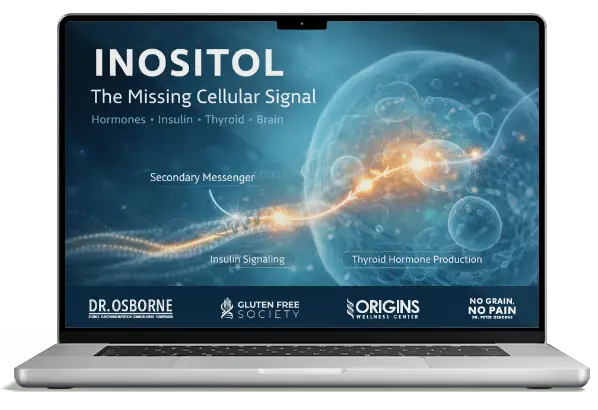
Inositol is a natural nutrient that enhances cellular signaling, making it highly effective for managing PCOS, insulin resistance, and anxiety. Research supports a daily dosage of 4g for metabolic health (up to 18g for mental health), but consistency is key—it typically takes 3 to 6 months to see significant results. While safe, users should start with a low dose to avoid digestive upset as the body adjusts.
In simple terms, inositol is a naturally occurring type of sugar that your body produces and uses to keep your cells functioning correctly.
While it was historically referred to as Vitamin B8, it is not technically a vitamin because your body can make it on its own (primarily in the kidneys). It is a carbohydrate found abundantly in the brain and other tissues.
There are nine different “forms” (isomers) of inositol, but when you hear people talking about “inositol benefits” or reading research papers, they are almost exclusively referring to myo-inositol. This is the most stable and abundant form in the human body.
Inositol acts as a structural component of cell membranes and influences the action of insulin and neurotransmitters like serotonin and dopamine.
Inositol is not a drug. Like a vitamin, it behaves as a functional facilitator. It doesn’t force your body to do something; it helps your body’s internal messaging system work the way it was designed to.
To understand why inositol helps with such different conditions, you have to understand cell signaling.
The easiest way to visualize this is the Doorbell Analogy:
The Problem: In conditions like insulin resistance or PCOS, the “caller” (insulin) keeps ringing the bell, but nobody answers. The body responds by sending more callers (producing more insulin), leading to high blood sugar, inflammation, and hormonal chaos.
The Solution: Supplementing with inositol ensures there is someone “inside the house” to answer the door. By improving this signaling pathway, inositol helps the body become more sensitive to insulin, which can have a cascading positive effect on sex hormones, egg quality, and metabolic health.
Not all benefits are created equal. Below, we rank the uses of inositol based on the strength of current scientific evidence.
Strength of Evidence: High
This is the area where inositol shines brightest. PCOS is a complex hormonal condition often driven by insulin resistance. Because inositol improves insulin sensitivity, it targets one of the root causes of PCOS rather than just masking symptoms.
Research suggests inositol supplementation may help:
Strength of Evidence: Moderate to High
You do not need to have PCOS to benefit from inositol’s metabolic effects. Metabolic syndrome is a cluster of conditions (high blood pressure, high blood sugar, excess body fat around the waist) that increase the risk of heart disease and diabetes.
A systematic review published in Molecules highlighted that myo-inositol supplementation is effective in lowering fasting blood glucose and improving HOMA-IR (a marker of insulin resistance)
Furthermore, it may help improve lipid profiles by lowering triglycerides and LDL (“bad”) cholesterol, though results can vary based on the individual’s starting health markers.
Strength of Evidence: Moderate
While often touted as a general “anti-anxiety” supplement, the strongest clinical evidence is specifically for panic disorder.
Inositol affects neurotransmitters like serotonin and GABA. A famous double-blind, crossover study published in the Journal of Clinical Psychopharmacology compared inositol to fluvoxamine (a common antidepressant). The study found that 18 grams (a very high dose) of inositol per day significantly reduced the frequency of panic attacks, with fewer side effects than the medication.
Important Note: The doses used for mental health in studies (12g–18g) are much higher than doses used for PCOS (2g–4g). Low doses may not have the same effect on the brain. If high doses seem unappealing, you might consider adopting a gluten free diet change. The connection between gluten and anxiety is strong.
Strength of Evidence: Promising but Mixed
Some research indicates that taking myo-inositol during pregnancy may reduce the risk of developing gestational diabetes, particularly in women who are overweight or have a family history of diabetes. A 2015 Cochrane review found that myo-inositol was associated with a reduction in GDM rates.
However, guidelines are still evolving, and you should always work with your OB-GYN before adding supplements during pregnancy.
| Benefit | Who it Helps Most | Strength of Evidence | Key Notes |
|---|---|---|---|
| PCOS Management | Women with irregular cycles & androgen symptoms | High | Helps restore ovulation and lower testosterone. |
| Insulin Sensitivity | People with metabolic syndrome or pre-diabetes | High | Lowers fasting glucose and HOMA-IR levels. |
| Panic Attacks | Those with Panic Disorder | Moderate | Requires very high doses (12–18g) to mimic study results. |
| Gestational Diabetes | Pregnant women at risk | Moderate/Mixed | Prevention is more supported than treatment; consult OB-GYN. |
| Depression | Those with mild mood disturbances | Low/Mixed | May support standard treatment, but not a standalone cure. |
Because inositol is a water-soluble nutrient, it is generally considered safe and non-toxic, but getting the dosage right is key to seeing results.
If you take a full 4-gram or 12-gram dose on day one, you will likely experience gas, bloating, or diarrhea. Your body needs time to adjust.
| Goal | Typical Daily Dose | Frequency | Time to See Results |
|---|---|---|---|
| PCOS / Metabolic | 4,000 mg (4g) | 2g with breakfast, 2g with dinner | 3–6 months for cycle regulation |
| Fertility / Egg Quality | 4,000 mg (4g) | Divided doses | 3 months prior to conception |
| Panic / Anxiety | 12g – 18g | Divided into 3–4 doses daily | 4–6 weeks for symptom reduction |
| General Wellness | 1,000 – 2,000 mg | Once or twice daily | Varies |
One of the reasons inositol is so popular is its safety profile. Since it is a substance your body naturally makes, allergic reactions are extremely rare. However, side effects are possible.
Dosing Tip: Side effects are almost always dose-dependent. Reducing your dose for a few days usually resolves the issue.
You might be wondering, “Can’t I just eat more fruit?” Inositol is found naturally in many foods. Top grain free sources include:
The Challenge With Food Based Inositol: The average diet provides about 1 gram (1,000 mg) of inositol per day. However, the therapeutic doses used in studies for PCOS and anxiety are 4 to 18 grams.
While eating an inositol-rich diet is healthy, it is virtually impossible to eat enough cantaloupe to reach the levels shown to help with insulin resistance or panic attacks. This is why supplementation is usually required for therapeutic effects.
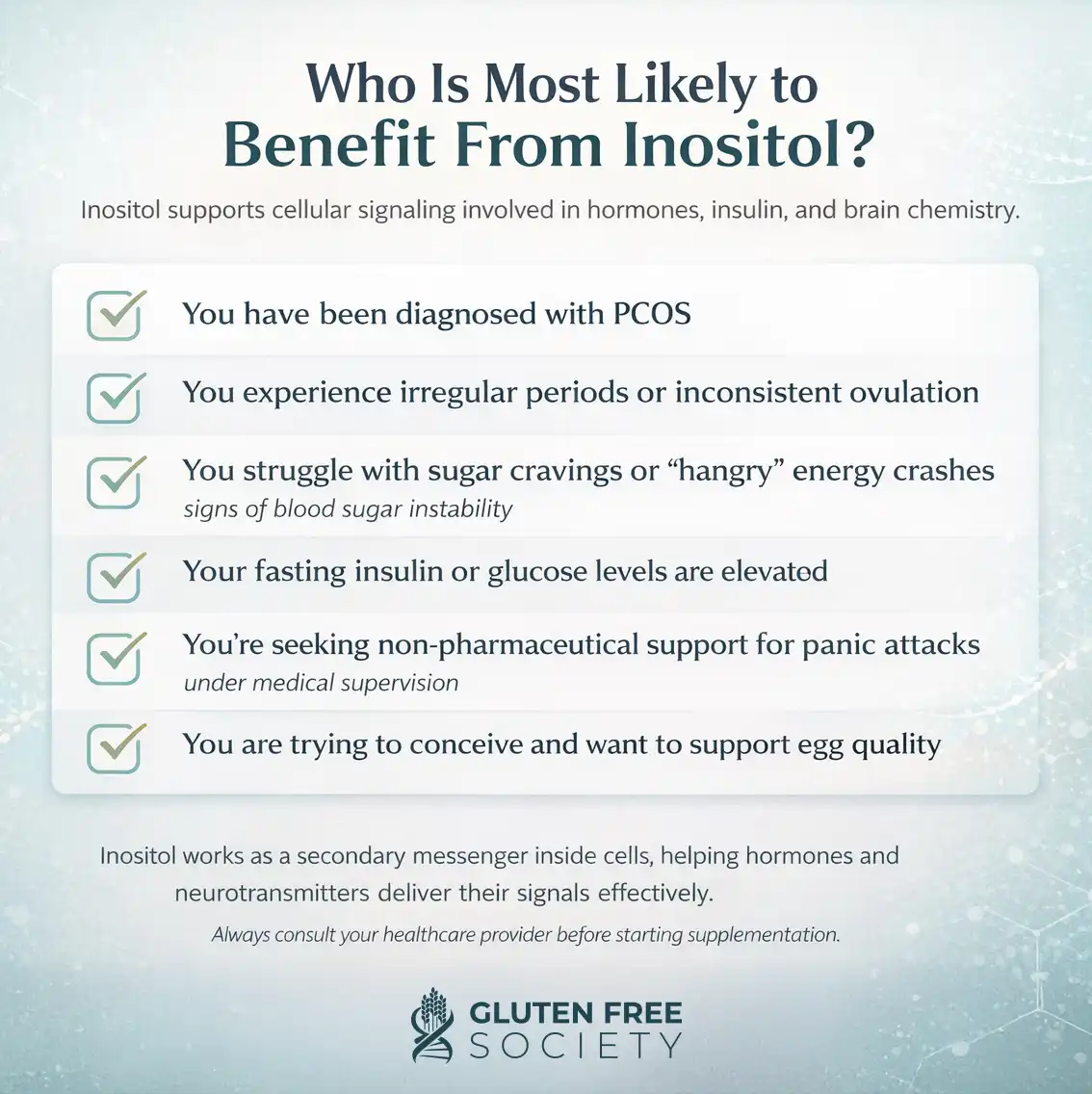
Inositol might be a good fit for your regimen if you check one or more of these boxes:
To get the most out of inositol, avoid these common pitfalls:
Generally, yes. Many studies have looked at combined therapy. However, because both substances improve insulin sensitivity, there is a small risk of blood sugar dropping lower than expected. Consult your doctor, as they may want to adjust your Metformin dosage.
No. In fact, by improving insulin sensitivity, inositol is more likely to support weight maintenance or weight loss in individuals with metabolic imbalances. It does not contain enough calories to cause fat gain.
Some controlled trials found benefits for panic disorder symptoms, but doses were high and this should be guided by a clinician, especially if you’re on psychiatric medications.
Both forms are effective. Capsules are convenient for lower doses (2g), but if you require high doses for anxiety (12g+), powder is much more practical and cost-effective. Powdered inositol has a slightly sweet taste and dissolves easily in water.
Evidence reviews used for PCOS guidance suggest inositol may improve some metabolic, hormonal, and reproductive outcomes, though results vary and study quality is mixed.
If your hair loss is related to PCOS (androgenic alopecia), inositol may help. By reducing circulating androgens (testosterone), it can reduce the hormonal drive that causes hair thinning in women with PCOS.
Some users report better sleep, likely due to its role in neurotransmitter regulation, but it is not a sedative. It can be taken at night without fear of keeping you awake.
Yes. While it is famous for women’s health, men with metabolic syndrome, insulin resistance, or anxiety can benefit from the same mechanisms. Some research also suggests it may support sperm quality.