new to the gluten free journey?


Most people know glutamine as either a bodybuilding supplement or something added to a gut-healing powder. And although both statements are true, that barely scratches the surface of the important functions L-glutamine plays the body.
Glutamine is one of the most abundant amino acids in the human body, and your intestinal lining, immune cells, skeletal muscles, kidneys, and liver use enormous amounts of it every day. Your body can normally make glutamine on its own. That is why it was historically classified as a “nonessential” amino acid.
But there is an important catch. During major physiological stress, your body’s demand for glutamine can increase faster than you can produce it. This is why glutamine is now widely described as a conditionally essential amino acid – where some of the most commonly recognized conditions driving the need are burn wounds, physical trauma, severe inflammation, wasting, infection, and low protein intake.
L-glutamine is as an important fuel for the small intestinal cells, immune cells, and fibroblasts (cells that help repair damaged tissue). It stimulates the production of IgA (a protective antibody that regulates gut permeability). It is a nitrogen carrier, a regulator of acid-base balance, and a precursor for nucleotides and proteins. It also acts as a precursor for the production of glutathione (the primary peptide that aids in liver detoxification).
L-glutamine can be obtained from dietary sources, but it can also be produced by the body from other amino acids. Because the body can produce it, deficiencies are less common unless a pre-existing condition is driving the need beyond what the body can produce it. In modern society, glutamine deficiency is probably more common than reported for several reasons:
The combination of the health profession knowledge gap with social diet and lifestyle influences create a unique opportunity where learning about L-glutamine may play an important role in benefiting the health and nutrition of chronically inflamed patients.
| Category | Key Details |
|---|---|
| Nutrient | L-glutamine |
| Type | Conditionally essential amino acid |
| Major functions | Intestinal cell fuel, immune metabolism, nitrogen transport, nucleotide synthesis, acid-base regulation, glutathione metabolism |
| Major storage/production tissue | Skeletal muscle |
| Classic deficiency | Uncommon in healthy people, but modern lifestyle conditions predispose to deficiency |
| When glutamine becomes essential | Chronic inflammation, trauma, fractures, burn wounds, infection, intestinal damage, and excess exercise all increase need. |
| Where glutamine supplementation shows benefit | Severe infection, trauma, surgery, intestinal inflammation, catabolic illness, exercise recovery, immune dysfunction, inadequate protein intake |
| Laboratory Testing | Intracellular Nutrient Analysis (INA) and Plasma amino acid analysis |
| Food Sources | Meat, poultry, fish, eggs, dairy, other protein-rich foods |
| Established RDA | None |
| Observed Safe Level in Healthy Adults | 14 g/day |
| Commonly Used Supplemental Doses | Varies greatly from 1.5 grams – 30 plus grams daily |
| Glutamine Supplement Cautions | Liver disease, glutamate sensitivity |
Glutamine is one of the 20 amino acids your body uses to make proteins, but its job goes far beyond building muscle. It is the most abundant free form amino acid in both blood and muscle tissue. It contains two nitrogen groups, making glutamine extremely useful for moving nitrogen between tissues.
That nitrogen can then be used to manufacture:
An estimated 20-80 grams of glutamine is produced daily in the human body (mostly made in the muscle). In comparison, the average human diet provides about 3-6 grams daily from foods. Glutamine can also be produced in the liver, lungs, and fat cells. Because the body can make it, it is classified as a non essential amino acid. Though that classification can change under certain conditions.
Healthy skeletal muscle manufactures large amounts of glutamine. Under normal circumstances, that production along with diet consumption is generally enough to maintain glutamine levels, but under intense metabolic stress, tissues can consume glutamine at an accelerated rate. See below for common examples where glutamine becomes essential.
The cells lining your small intestine (enterocytes) turn over rapidly (every 2-7 days). That takes energy. Glutamine is one of the major fuels used by these cells, and inadequate supply can contribute to intestinal permeability (leaky gut).
Many different types of white blood cells can use glutamine as a fuel source. Lymphocytes, macrophages, and neutrophils can consume glutamine at surprisingly high rates. During immune activation, their glutamine requirements increase substantially, and immune cells consume glutamine at rates similar to or greater than glucose.
IgA is a specialized antibody produced in the GI tract that binds to toxic and microbial compounds to aid in the expulsion of them from the body. It is one of the most important protection mechanisms of the innate immune system. L-glutamine stimulates specialized cells in the GI tract (Microfold or M Cells) to produce IgA.
Glutamine functions like a nitrogen shuttle. When amino acids are broken down, the nitrogenous compound, ammonia (NH3), is released. It high levels of ammonia build up, it can become toxic to tissues. Glutamine picks up and binds to ammonia rendering it safe for travel through the bloodstream. This shuttle function is particularly important because nitrogen is required to produce amino acids, nucleotides, DNA, RNA, and proteins.
Nitric oxide is critical compound that aids in regulating blood vessel dilation. This function enhances blood flow, oxygenation, and nutrient delivery to tissues. It is also an important compound used by immune cells to combat infection and immune assaults. L-glutamine aids in the downstream production L-arginine, a required amino acid for the production of nitric oxide.
Your kidneys break down glutamine to help carry acid out of through the urine and also to create a specialized compound called bicarbonate. Bicarbonate buffers acid in the bloodstream helping to regulate the pH (acid-base balance). down and use part of it to produce ammonia.
Glutamine can be converted into glutamate.
Glutamate can then combine with the amino acids cysteine + glycine to produce glutathione. Glutathione is one of the body’s major intracellular antioxidant systems.
Glutamine can ultimately be converted into a compound called alpha-ketoglutarate, which enters the Krebs cycle (energy production cycle in your cells). This cycle helps drive the production of ATP (the energy molecule used by all cells in the body). That means glutamine can serve as both: a building material and an energy substrate.
A typical healthy person is not likely to develop a glutamine deficiency. But there are situations and conditions where L-glutamine deficits can develop, and providing more through diet and supplementation may become helpful or necessary:
In addition to the above, there are medical treatments that may drive the need for supplemental L-glutamine. These include:
Though no direct research measuring drug induced glutamine deficiency has been performed. There are several medications that may interfere with metabolic pathways around glutamine metabolism. For example, glutamine metabolism is dependent on magnesium and vitamin B6. By that logic, any medication that interferes with these two nutrients could impact glutamine levels in the body. Common medications that deplete magnesium and B6 include oral contraceptives and corticosteroids.
This is one of the most interesting areas for glutamine. Celiac disease manifests as an autoimmune response that damages the small intestine lining. This damage can cause:
Several studies on patients with celiac disease have shown lower levels of L-glutamine as compared to healthy patients. The importance of this finding is suggestive that L-glutamine supplementation may be beneficial along with a gluten free diet in newly diagnosed celiac patients. Remember that glutamine serves as a primary fuel source for the cells of the small intestine. The very fuel required for healing and repair of damaged gut tissue.
One study on children with celiac disease found significantly lower plasma levels of glutamine, citrulline, and cystine compared to healthy patients. Another study found similar results (significantly lower glutamine levels) in 50 children diagnosed with celiac disease compared to healthy controls.
In my clinical experience, L-glutamine insufficiency is common in those with gluten sensitivity upon initial nutritional testing using intracellular analysis (INA). Supplementation has proven beneficial for many patients in the dose range between 3-5 grams/day.
There are clinical symptom patterns that often indicate the need for L-glutamine. The most common patterns clinically are:
Intestinal pain, bloating, muscle pain and weakness, fatigue, exercise intolerance, and frequent recurring infections of both the upper respiratory and urinary tracts. When these symptoms are present along with other risk factors – i.e. vegan or low protein diet, recent surgery, trauma, or infection, history of a chronic inflammatory disease, or use of medicines that damage digestion or absorption, think possible glutamine deficiency.
The chart below summarizes symptoms and possible lab correlates:
| Patient Complains of | Laboratory Findings That May Indicate Low Glutamine |
|---|---|
| Fatigue, muscle loss/pain, and exercise intolerance | Elevated Lactate Dehydrogenase (LDH), Creatine Kinase (CK), and C-Reactive Protein |
| Recurring infections, colds, flus | Low levels of IgA in the serum, saliva, or stool |
| Distended abdomen and right flank pain | Elevated blood ammonia levels |
** The lab findings above may be covered by insurance, but they are nonspecific, so the best way to identify low or insufficient glutamine is through direct measurement. The following table lays out the best laboratory tests to measure for glutamine directly:
| Marker | Specimen Type | Standard Reference Range (Adults) |
|---|---|---|
| Intracellular Nutrient Analysis (INA) | Lymphocyte Proliferation (Blood) | < 110% (Functional proliferation index) |
| Plasma Glutamine | Blood (Plasma) | 332 – 774 (µmol/L) |
| Urine Glutamine | Random/First-Morning Urine | 5.0 – 1756.2 (µmol/g creatinine) |
| 24-Hour Urine Glutamine | 24-Hour Urine Collection | 130 – 580 (µmol/24 hours) |
Bottom line: Test, don’t guess.

This is where the story gets more complicated. The simple answer is Yes…and No.
The intestine is lined with rapidly dividing cells. These cells require glutamine as their primary fuel source. The proteins that anchor these cells together (claudin-1) is dependent on glutamine. The IgA antibodies that bind and neutralize gut toxins is produced as a result of glutamine stimulation. Thus the cells, the tight junction barrier, and the immune shield of the gut all rely on adequate glutamine supplies. The diagrams below illustrate these roles graphically:
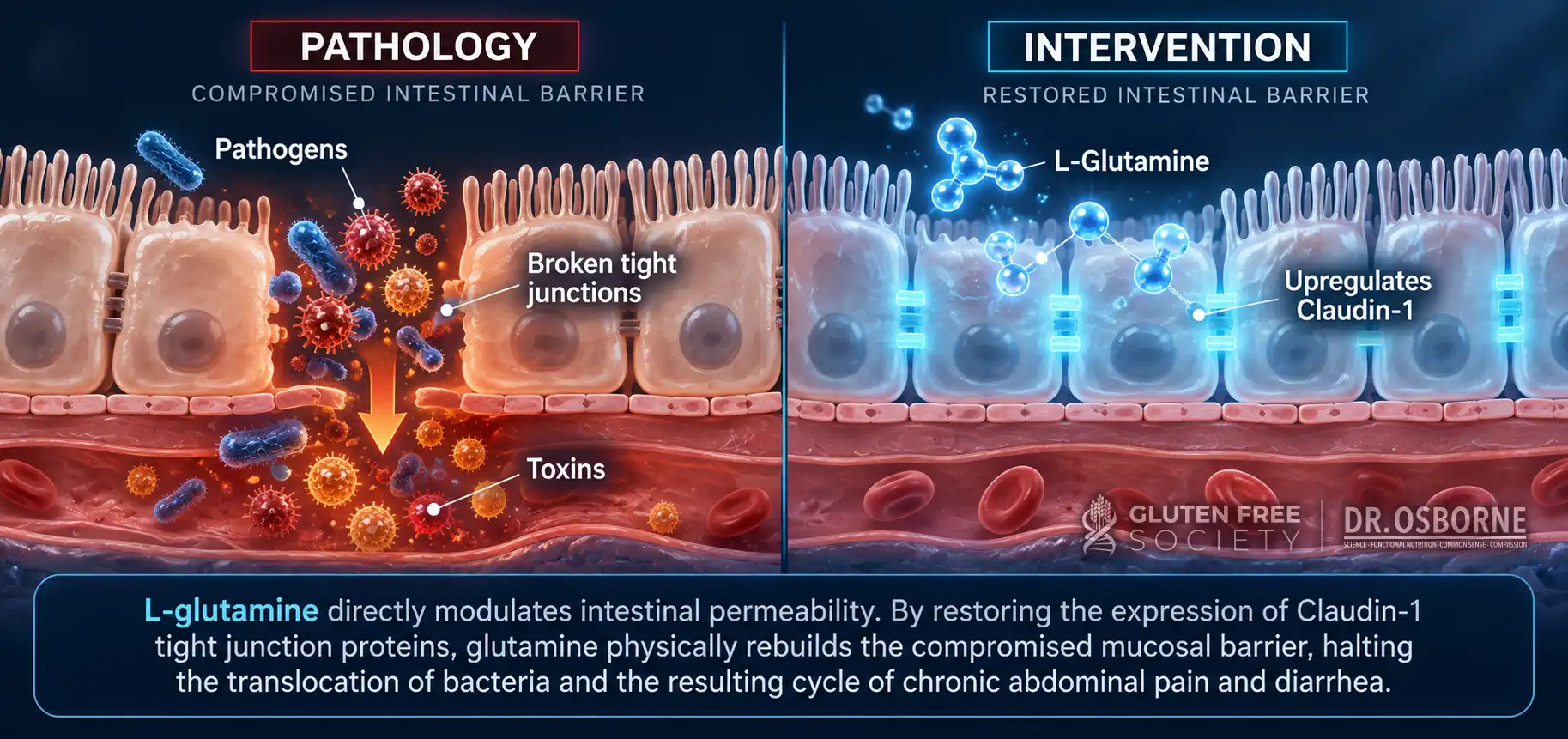
Glutamine is both a fuel source for the cells lining the gut, and a stimulator of SIgA (specialized toxin binding antibodies that protect the gut from damage).

Leaky gut has many triggers. One of them can be glutamine deficiency. The other common triggers are listed below:
You cannot out-supplement an ongoing trigger. Simply put, if you are constantly being exposed to triggers, supplementing glutamine will not resolve your leaky gut issue. This is why the research on glutamine and leaky gut is mixed. Some studies report benefit while other studies show less promise.
If you have glutamine deficiency, oral glutamine supplementation may be the right fix. If you have other triggers, glutamine supplementation will not make them go away. Identifying and removing triggers needs to be your primary goal if you want to achieve long term health success. Once again…Test, don’t guess.
Strenuous exercise, particularly in the heat, can transiently increase intestinal permeability. That makes glutamine particularly interesting for endurance athletes who develop gastrointestinal symptoms.
In a human dose-response trial involving running in the heat, ten recreationally active men consumed glutamine at doses of:
two hours before running for 60 minutes in a 30°C environment.
Glutamine attenuated the rise in intestinal permeability compared with placebo, with the largest dose producing the strongest effect.
Other human work has also reported reductions in exercise-induced permeability following glutamine supplementation, including a seven-day supplementation study measuring intestinal permeability and tight-junction responses.
This may represent a specialized application for certain endurance athletes.
Glutamine became enormously popular in sports nutrition because skeletal muscle stores and produces large amounts of it. Though human studies using glutamine do not show that it helps build muscle, studies do show that it aids in exercise recovery. This includes a reduction in muscle soreness, reduced muscle damage, as well as quicker recovery times.
The key take away is simple: If you are looking to reduce post exercise muscle soreness and to recover faster with less pain, glutamine supplementation may be of benefit to you.
A popular circulating opinion is that L-glutamine feeds cancer cells and can make cancer worse. These statements are unfounded, and human research actually paints a very different picture.
No. Though some cancer cells can use glutamine as a fuel source, there is no scientific evidence that connects glutamine supplementation to increased cancer risk or worsening of pre-existing cancer. To the contrary, glutamine is a major source of fuel for the immune cells that fight cancer (Natural Killer and T-Cells). Glutamine also aids in downregulating cancer genes that can drive tumor progression. Oncologists often use L-glutamine to treat patients undergoing chemotherapy and radiation as it has been found to be beneficial in protecting them from drug side effects (see below).
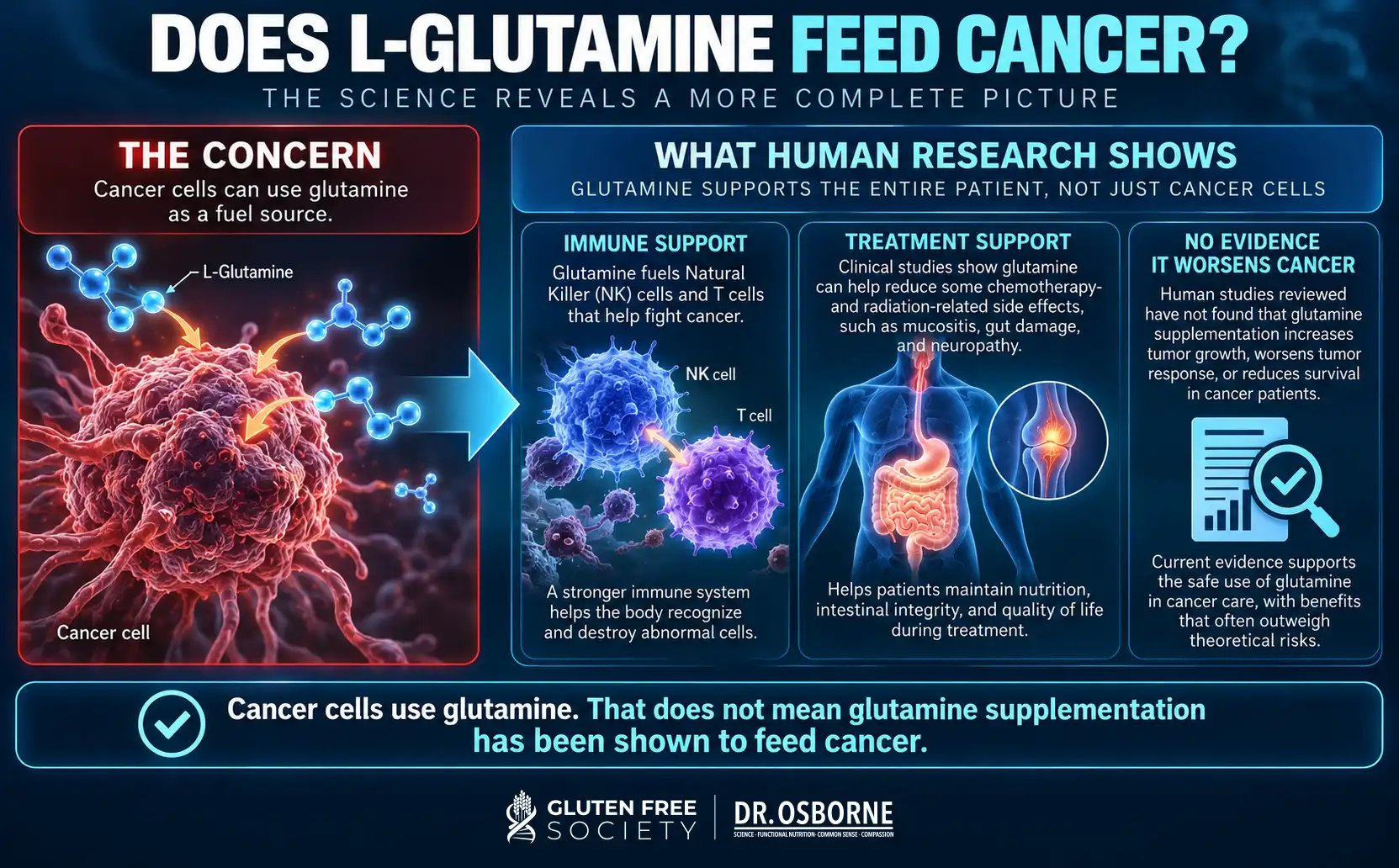
Chemotherapy and radiation damage rapidly dividing cells, including those lining the mouth and gastrointestinal tract.
A 2021 meta-analysis of 16 randomized controlled trials reported that glutamine reduced the incidence of severe grade 3 and grade 4 oral mucositis associated with chemotherapy or radiation therapy.
Another meta-analysis involving 15 studies and 988 participants found that glutamine reduced mucositis severity and the incidence of severe mucositis.
Human research suggests glutamine may reduce the severity of treatment-related oral mucositis in some cancer populations, but the evidence is not uniformly positive.
This is one circumstance where glutamine use should be coordinated with the oncology treatment strategy.
One of the strongest clinical demonstrations of glutamine comes from sickle cell disease.
A phase 3 randomized placebo-controlled trial published in The New England Journal of Medicine tested pharmaceutical-grade L-glutamine at 0.3 grams per kilogram per dose twice daily in patients with sickle cell anemia or sickle beta-zero thalassemia.
The study found fewer median pain crises and fewer hospitalizations in patients receiving glutamine.
Pharmaceutical L-glutamine is now approved as prescription medication, Endari, to reduce acute complications of sickle cell disease in adults and children five years and older. Current prescribing information lists doses of 5 to 15 grams twice daily depending on body weight.
There is no established RDA for glutamine. There is also no official tolerable upper intake level comparable to those established for many vitamins and minerals. Keep in mind that a healthy adult can make between 30-80 grams of glutamine daily (mostly made in the muscle).
Human studies have used dramatically different doses because they were investigating dramatically different clinical situations.
| Research Setting | Dose Studied | Duration |
|---|---|---|
| Post infectious IBS-D | 5 g three times daily | 8 weeks |
| Exercise-induced permeability | 0.25 to 0.9 g/kg fat-free mass | Acute |
| Crohn’s permeability trial | 0.5 g/kg ideal body weight/day | 2 months |
| Healthy-adult safety assessment | Up to 14 g/day identified as safe (OSL) | Variable studies |
| Sickle cell prescription therapy | 10 to 30 g/day depending on body weight | Long term |
| Critical-care protocols | Much higher specialized dosing | ICU setting |
In my clinical experience, therapeutic doses for muscle soreness range from 3-10 grams/day depending on the size of the patient. For GI tract support, observed positive outcomes are commonly seen at doses between 3-5 grams daily.
A formal risk assessment published in Regulatory Toxicology and Pharmacology reviewed available human glutamine trials and concluded that evidence for the absence of adverse effects was strong at supplemental intakes up to 14 grams per day in normal healthy adults. The researchers called this an Observed Safe Level, or OSL.
Yes. Potential adverse effects reported with glutamine use include gastrointestinal discomfort, nausea, constipation, abdominal pain, anxiety and headache. The GI symptoms are commonly caused by the osmotic effect on the gut. If you experience anxiety or headaches, it may be caused by a magnesium or vitamin B6 deficiency. These nutrients are required to properly metabolize glutamine and prevent a build up of glutamate (the culprit for the symptoms).
A randomized crossover safety study in middle-aged and elderly adults used 0.5 grams per kilogram per day for 14 days. Investigators did not observe clinically significant adverse effects, but they did find increases in blood urea nitrogen and creatinine along with a decline in estimated glomerular filtration rate.
Those changes were not considered clinically significant in the study, but the authors recommended careful assessment of renal function when high doses are used in older individuals.
Particular caution makes sense with:
Glutamine is naturally present in protein-rich foods. One challenge is that glutamine content is difficult to quantify precisely using conventional food-analysis techniques.
Researchers developed a food-composition database specifically to estimate glutamine and related amino acids. The study published in the European Journal of Clinical Nutrition found considerable variation in glutamine content among different foods and protein sources.
For practical purposes, the best grain-free glutamine strategy is simply to consume adequate high-quality protein.
Good sources include:
Rather than obsessing over the exact milligrams of glutamine in broccoli versus beef, focus on adequate total protein intake.
Your body can manufacture glutamine from other amino acids when the raw materials and metabolic conditions are available.
This is the most common form found in powders and capsules. It is easy to dose and has been used extensively in human research.
Glutamine can also be combined with another amino acid, such as alanine, to create a more stable dipeptide. These forms are particularly relevant in specialized clinical nutrition.
The comprehensive review of glutamine metabolism and clinical supplementation discusses the use of both free glutamine and stable glutamine-containing dipeptides in nutritional and medical settings.
For ordinary nutritional supplementation, plain L-glutamine is generally the simplest approach.
Glutamine does not work in isolation. Consider its relationship with:
| Nutrient | Relationship to Glutamine |
|---|---|
| Protein | Supplies amino acids used to produce glutamine |
| Glutamate | Closely linked metabolically with glutamine |
| Cysteine | Combines with glutamate and glycine to make glutathione |
| Glycine | Required for glutathione synthesis |
| Vitamin B6 | Important cofactor in glutamine metabolism |
| Magnesium | Supports ATP-dependent recycling of glutamine |
| B vitamins | Support energy and nucleotide metabolism |
If you plan on using high doses of glutamine supplementation, consider adding 400-600 mg of magnesium and 25-50 mg of vitamin B6 (pyridoxal 5 phosphate form) to support glutamine metabolism and reduce the potential for side effects.
Mistake #1: Assuming everyone is glutamine deficient.
Healthy people manufacture substantial amounts of glutamine.
Mistake #2: Blindly trying to treat every case of leaky gut with glutamine.
The 2024 permeability meta-analysis shows why that assumption is too simplistic.
Mistake #3: Using glutamine instead of removing gluten.
You cannot repair a barrier effectively while continuing to expose it to the trigger causing the injury.
Mistake #5: Assuming more is better.
The REDOXS critical-care trial is an important reminder that aggressive replacement can become counterproductive in the wrong metabolic setting.
Mistake #6: Ignoring overall protein intake.
One isolated amino acid cannot compensate for a chronically inadequate diet.
Mistake #7: Taking it indefinitely without defining success.
Know what you expect it to accomplish. Then measure whether it accomplished it.
L-glutamine functions as an important fuel and nitrogen source for intestinal cells, immune cells, muscles, kidneys, and other tissues. It participates in energy metabolism, nitrogen transport, nucleotide synthesis, acid-base regulation, and glutathione metabolism.
It is generally considered conditionally essential. The body normally produces it, but physiological demand can outpace production during severe stress.
Sometimes.
The postinfectious IBS-D trial showed a dramatic improvement in intestinal permeability, but not all cases of leaky gut are solved with high dose glutamine supplementation.
The best evidence is for post infectious IBS-D with increased intestinal permeability. Participants in the randomized Gut trial received 5 grams three times daily for eight weeks and experienced substantial improvements in symptoms, stool frequency, stool form, and permeability.
Studies on patients with celiac disease reported significantly lower plasma glutamine levels compared with healthy controls.
No. For celiac disease, gluten avoidance remains foundational. L-glutamine may help repair intestinal damage after gluten removal, gut glutamine will not resolve celiac disease as long as gluten is being consumed.
Not to any meaningful degree based on current controlled research. A systematic review and meta-analysis of athlete studies found no significant overall benefit for body composition or aerobic performance.
Glutamine occurs naturally in protein-containing foods, particularly meat, poultry, fish, eggs, dairy, nuts, seeds, and other protein-rich foods.
There is no single correct dose. Dosing ranges from 3-30 grams/day depending on the research study and the condition. As a general rule, 3-10 grams/day is safe and typically adequate for most people.
Five grams is within commonly studied supplemental ranges.
Yes. A published safety assessment identified 14 grams per day as an Observed Safe Level for normal healthy adults based on available human data, but this is not an official upper limit.
High-dose use deserves caution when renal function is impaired.
It can generally be taken with or without food depending on the formulation and purpose. When taking stand-alone amino acids, some people prefer using them away from a large protein meal.
That depends entirely on the goal, the condition, the dose, and the health of the person using it. Study durations with positive outcomes are largely variable, ranging from days to weeks, to months.
L-glutamine is one of the most abundant and versatile amino acids in your body. Your intestinal cells use it. Your immune cells use it. Your muscles manufacture and store it. Your kidneys and liver use it. Your body uses it to transport nitrogen, manufacture nucleotides, support antioxidant defense, generate energy, and maintain normal intestinal function. During intense physiological stress, demand can rise dramatically. The human research paints a broad picture for the potential benefits of glutamine.
But my bottom line if you are considering adding glutamine to your nutritional arsenal is simple:

Check out my post on based on questions asked during a live Q&A on L-Glutamine.






5 Responses
I am using this because I am a sugar addict. It is helping with the sugar craving, but the headaches are terrible. I just started this week supplementing, will the headaches diminish?
Deb,
You might consider reducing your dose helps take care of the headaches.
How long till the headaches slow after cutting dose down? They are horrible.
Try taking TMG it usually takes care of that id say no less then 1000 to 1500 mg of tmg
L-Glutamine causes me horrible headaches. It feels like a hangover headache. Tylenol barely stops the throbbing.